|
McCloud River Railroad Great Western Railway Museum |
|
|
|
Fred Kepner had a lifelong interest in steam locomotives, and he started acquiring railroad equipment in the later 1960s or early 1970s. Fred had dreams of establishing what he called the Great Western Railway Museum as a place to display and operate his collection, and spent much of his life looking for a suitable home for the museum. Fred had been trying to acquire the McCloud River #25 since at least the later 1960s, and when he learned that Itel had ordered then railroad president Bill Herndon to sell or scrap the locomotive he returned to McCloud with a proposal to lease and operate the engine. Itel consented, and Fred and a few helpers returned the #25 to service in May 1982. The apparent welcomeness the railroad expressed towards Fred caused him to decide to located his museum in McCloud, and he started shipping or trucking his collection to the town. Fred acquired the old Champion International truck shop on the eastern edge of McCloud, and he moved several pieces of his collection inside the building. The railroad agreed to store other pieces of his collection in McCloud. Fred also started buying some of the historical railroad equipment in McCloud, including the railroad's pair of former McCloud River Lumber Company Plymouth switchers, three of the old narrow guage switchers once used on the tram road in the McCloud mill complex, and former McCloud caboose #034. He also started exploring the potential of rescuing the Red Goose from Kinyon and restoring it to operation. By 1985 Fred had moved the bulk of his railcars plus several steam locomotives to McCloud, but his relationship with the McCloud River management had started to sour. The #25 operated for the final time under Fred's lease in 1986, then in late 1987 Fred filed a lawsuit against the McCloud River Railroad claiming breach of contract issues. The railroad initially claimed no contracts existed, then in May 1988 Itel pressured the railroad into settling the lawsuit. Fred received in the settlement title to the #25, Brownhoist crane #72, Burro crane #1851, flat car #501, and bucker plow #1767. The #25 and the other equipment Great Western owned remained in storage in McCloud through the rest of the 1980s and into the 1990s. Around 1995 the McCloud Railway decided it wanted to get the #25 back and started legal proceedings against the museum over unpaid storage fees, which resulted in title to the locomotive passing back to the railroad in January 1996 in exchange for debt forgiveness and other considerations. Fred shortly thereafter moved several pieces of his equipment to a narrow strip of land between the railroad main line and the old truck shop on the east end of McCloud, and then shortly thereafter started relocating what he could to some land he obtained in Merrill, Oregon. Fred passed away in October 2021. Oregon Coast Scenic Railroad stepped in to purchase his collection, some pieces they are retaining but the rest are being or have been sold. Several pieces of the collection remain in McCloud with a mixed and uncertain ownership status. Below are specifics on some of the equipment Fred and his museum had in McCloud at one time or another, this page does not contain information on the former McCloud equipment Fred owned as that is covered elsewhere on this site or any part of Fred's collection that did not make it to McCloud. 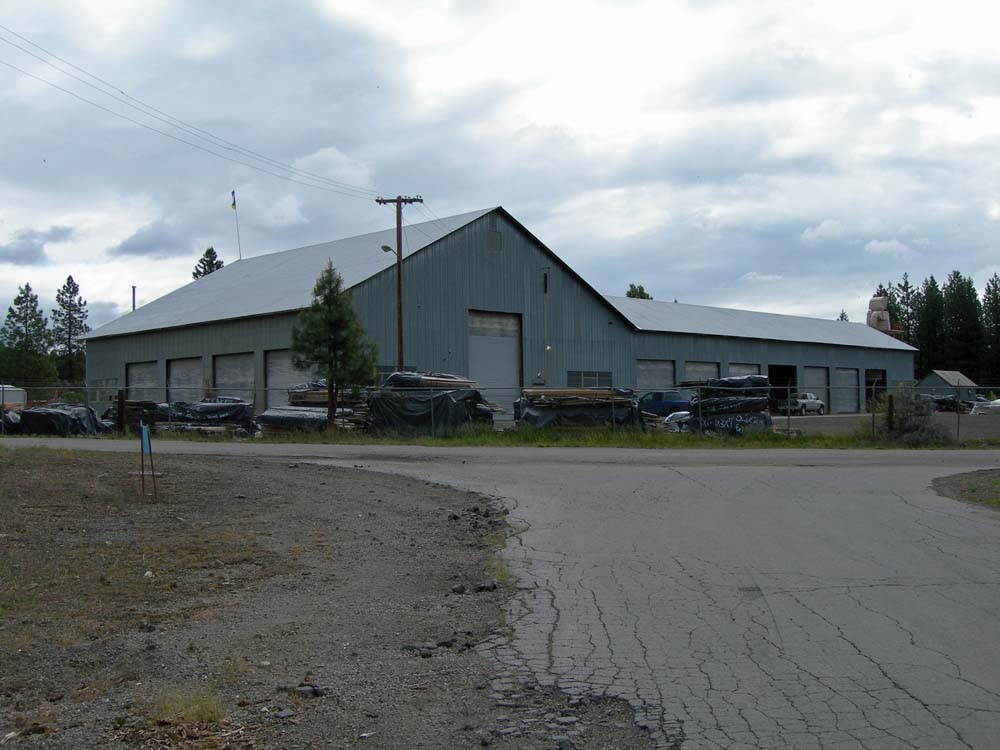 The old Champion International truck shop Fred acquired and used to house parts of his collection. Jeff Moore photo. |
|
|
|
Locomotives
Weyerhaeuser #4/Sierra #38/Rayonier #38 Perhaps the most famous locomotive Fred owned that passed through McCloud was Baldwin c/n 61781, a 2-6-6-2 built in 1934 for Weyerhaeuser Timber Company as their #4. The locomotive spent eighteen years powering log trains to the company's enormous sawmill complex in Klamath Falls, Oregon, before being replaced by Baldwin diesels in 1952. The Sierra Railroad in the California foothills then gave the locomotive almost instant superstar status when it, in the eyes of most railfans at the time, allegedly shunned diesels by buying the #4 instead, assigning it #38 on their roster. The reality was a bit more complicated in as much as the Sierra already had on-going discussions with Baldwin about buying diesels, and the #38 never was anything more than a stopgap measure to allow the railroad time to get financing together for the pair of S-12 diesels that replaced it in 1955. Rayonier then bought the #38 for use on their logging railroad running north from Grays Harbor, Washington, where it kept the #38. Rayonier started buying used Baldwin diesels in 1961, but the #38 remained active alongside them until finally retired after the company bought more used Baldwin diesels in 1968. The company then placed the locomotive on display at their Crane Creek reload. Fred bought the #38 when Rayonier decided to scrap the locomotive and shipped it to McCloud, where it remained until Fred moved it to Merrill in the early 2000s. Oregon Coast Scenic is in the process of moving the locomotive to their railroad. 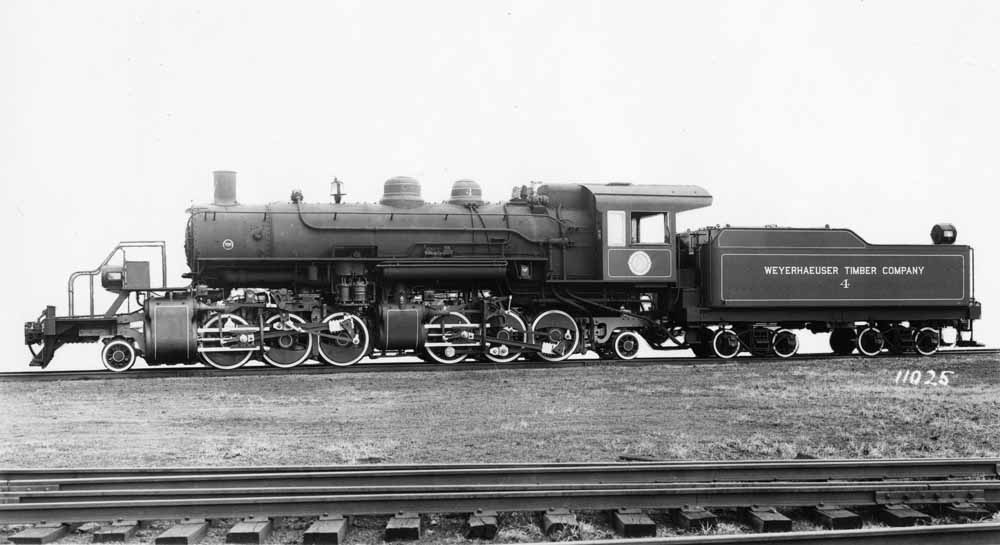 Builder's photograph of the #4 before leaving the Baldwin factory. Jerry Lamper collection. 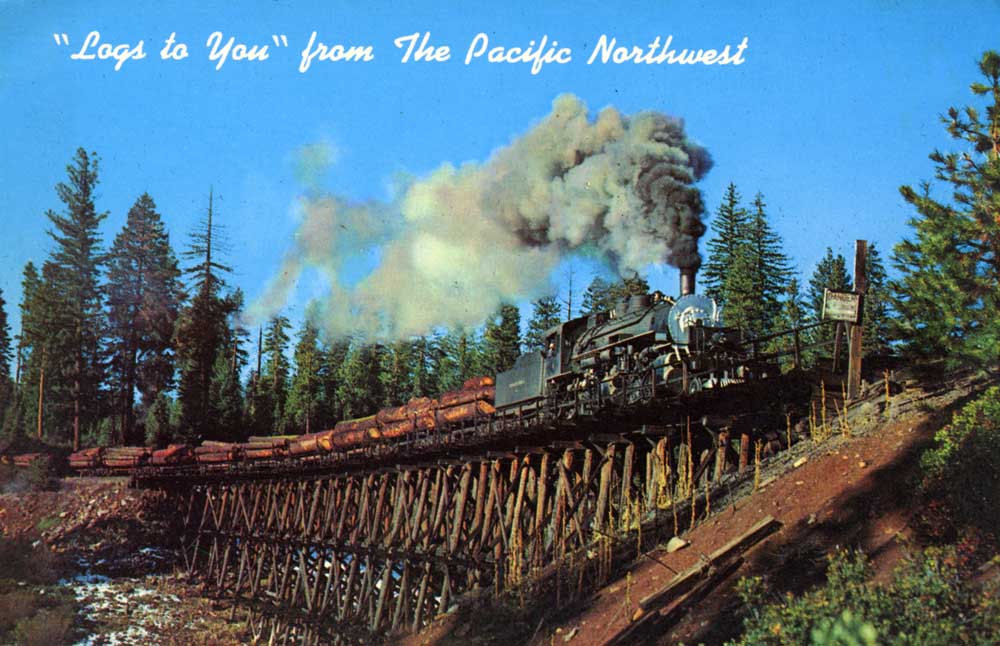 One of the best known shots of the locomotive during its time in southern Oregon is this one, shot on a trestle west of Klamath Falls and turned into numerous postcards. 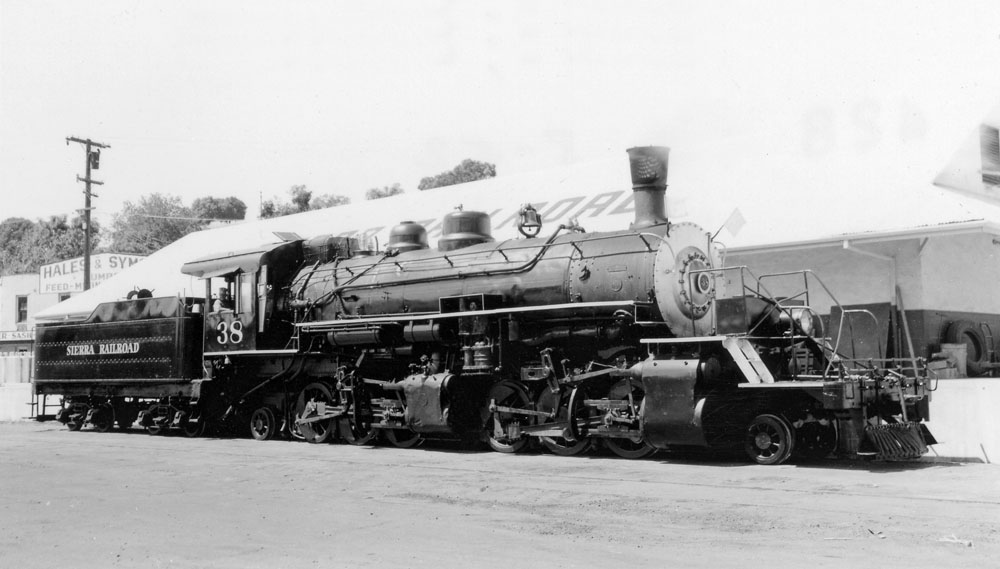 Doug S. Richter got this shot of the then Sierra #38 in Sonora, California, in August 1952. 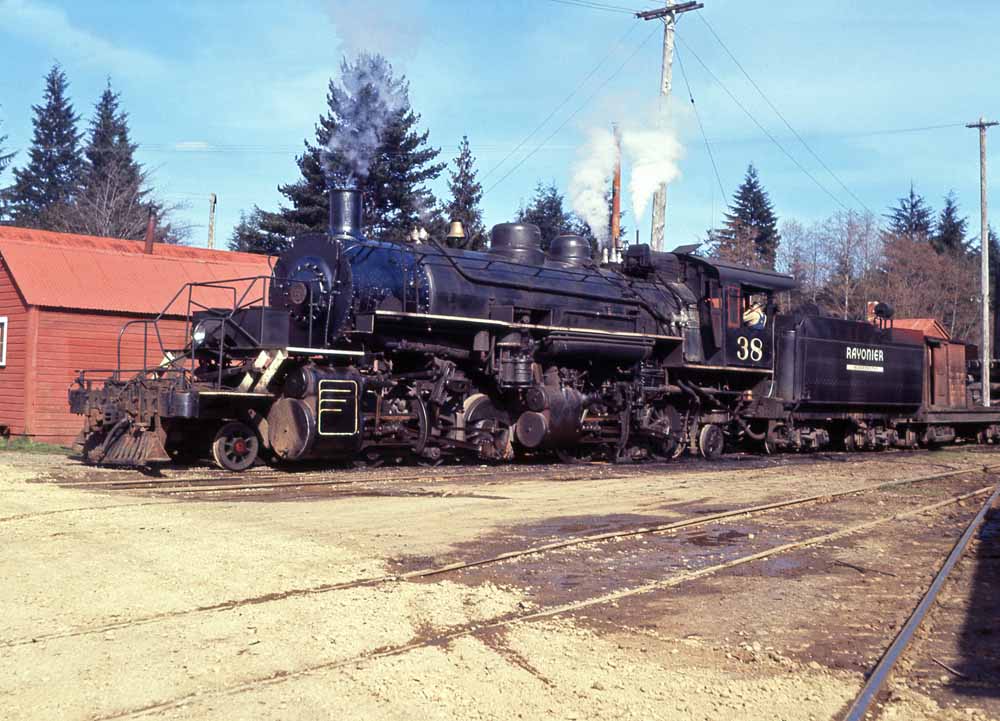 Charles Heimerdinger Jr. got this fine shot of the #38 powering a work train at Rayonier's famous Railroad Camp in Washington on 28 March 1961. 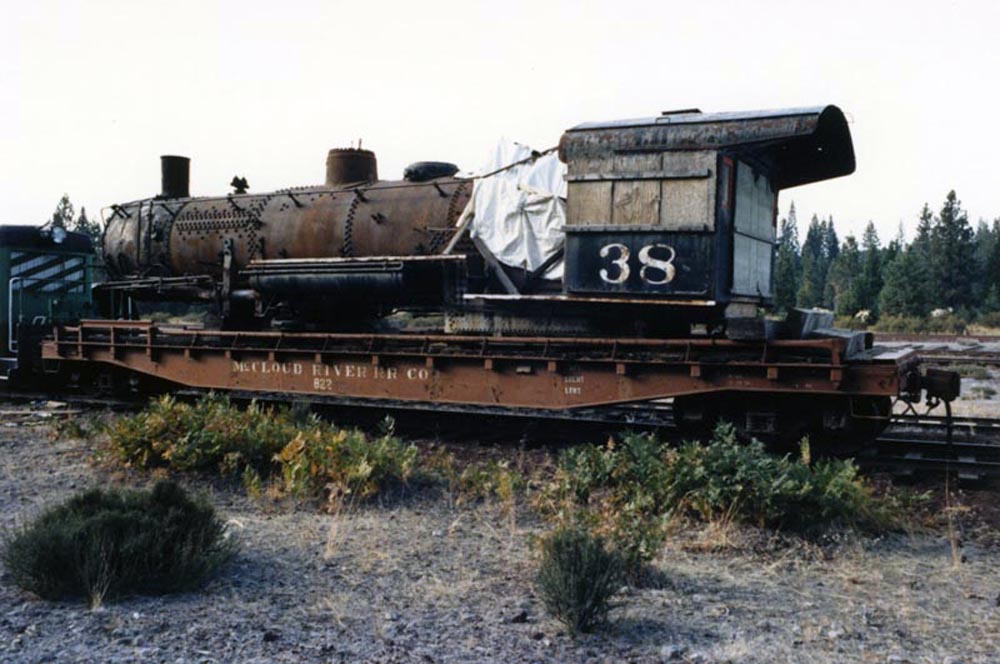 Fred had to disassemble the #38 to truck it from Crane Creek to McCloud. The boiler and cab of the #38 on McCloud River flatcar #822 shortly after arriving in McCloud. Pat Driscoll photo. 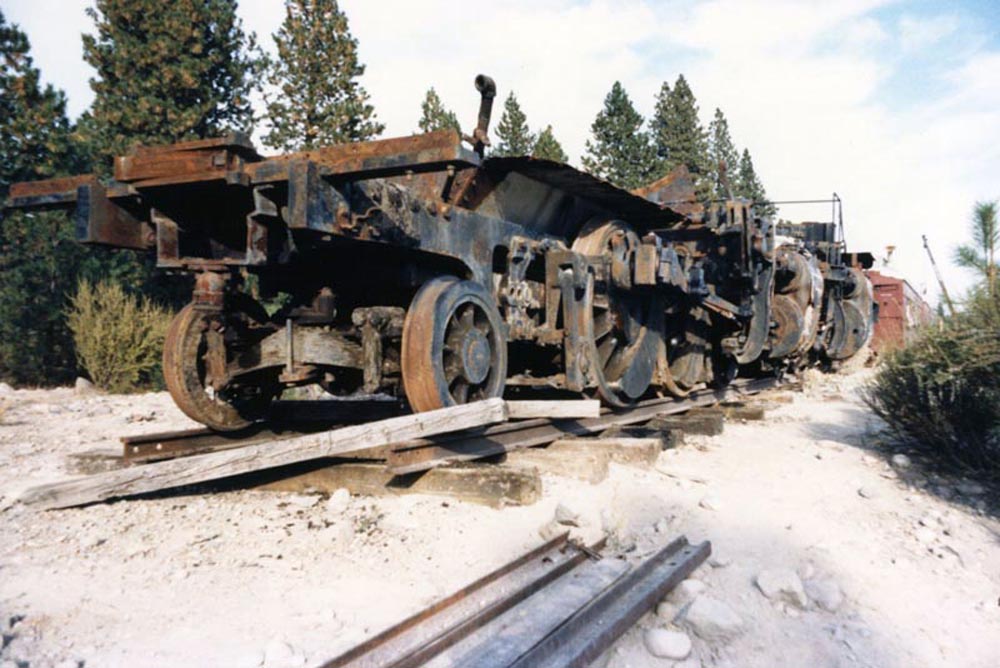 The frame and running gear of the #38 at Ash Creek Junction. Pat Driscoll photo. 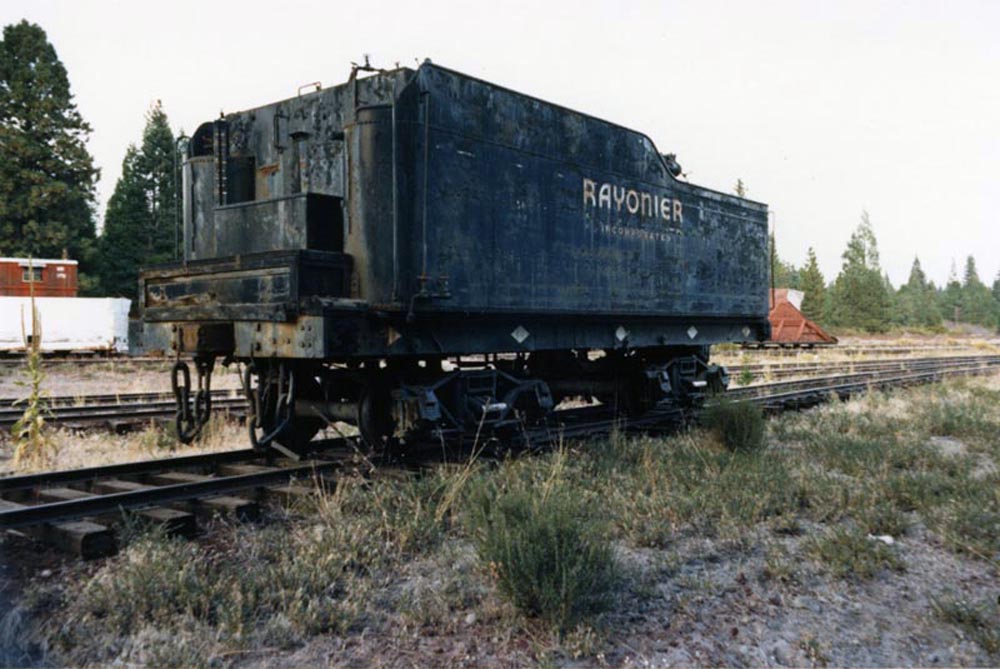 #38's tender at Ash Creek Junction. Pat Driscoll photo. Sierra #18 Baldwin built their c/n 29790 in 1906 new for the Sierra Railway as their #18. The small 2-8-0 turned in decades of dependable service for its owner, then found a second career as a movie star as Hollywood studios filmed an endless number of Western films on and around the railroad. Time and increasing age finally caught up with the #18 in 1953 when Sierra finally retired the veteran locomotive. Sierra sold the #18's tender to the Tidewater Southern for use behind their 2-6-2 #132, itself a former Sierra locomotive, but the #18 remained stored in Jamestown, California, for several years before the road sold it to West Coast Trailer Sales in Sacramento, California, where it remained on display for several more decades. Fred bought the locomotive in 1984 and shipped it to McCloud, where he stored it in the old truck shop before moving it to Merrill. A private collector bought the locomotive from Oregon Coast Scenic. 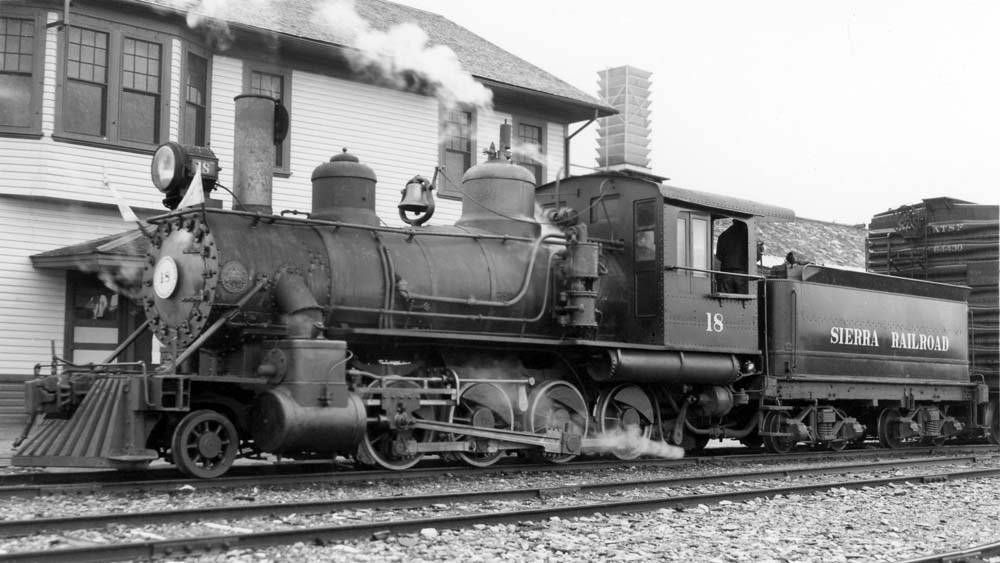 An uncredited and undated image of the #18 at work on the Sierra. 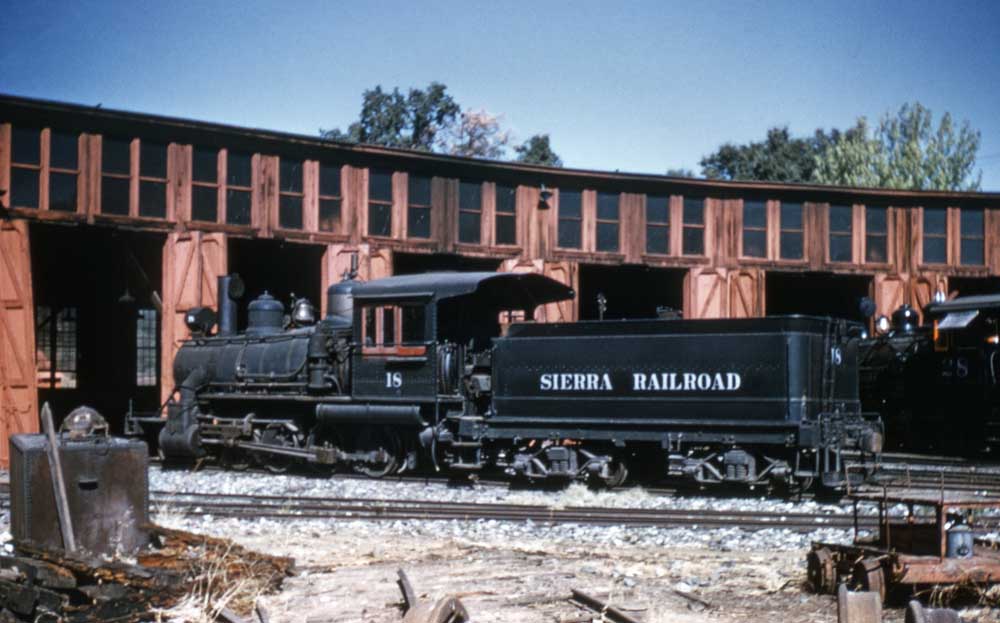 A color shot from a commercial duplicate slide set of the #18 at the railroad's roundhouse in Jamestown, California. Jerry Lamper collection. Weed Lumber/Long Bell Lumber #4 The Weed Lumber Company in 1907 ordered new from Baldwin a pair of 2-6-2 tank-type locomotives as their #3 (c/n 30509) and #4 (c/n 30519). Baldwin delivered the pair without tenders, but shortly after entering service Weed equipped both with small four wheel tenders to increase their range. The Weed operations expanded dramatically in 1919 after the company bought 70,920 acres of timberlands northeast of Mt. Shasta from the McCloud River Lumber Company, and in 1920 Weed bought a pair of slope back tenders new from Baldwin as an extra order at the same time as they also picked up another pair of 2-6-2s. Weed successor Long-Bell Lumber sold the #3 around the end of the 1920s, but the #4 remained on the line up to the end of rail operations. Long-Bell sold the #4 for scrap, but actor and singer Gene Autry crossed paths with the locomotive before it could be cut up, bought it, and shipped it to his Melody Ranch near Newhall, California, for display. In either 1986 as per one source or 1990 as per another Gene sold the #4 to Fred, who trucked it to the Champion truck shop in McCloud for storage. Fred later moved the locomotive to Merrill, then Chris Baldo purchased the #4 from Oregon Coast Scenic and shipped it to his shop in Willits, California. 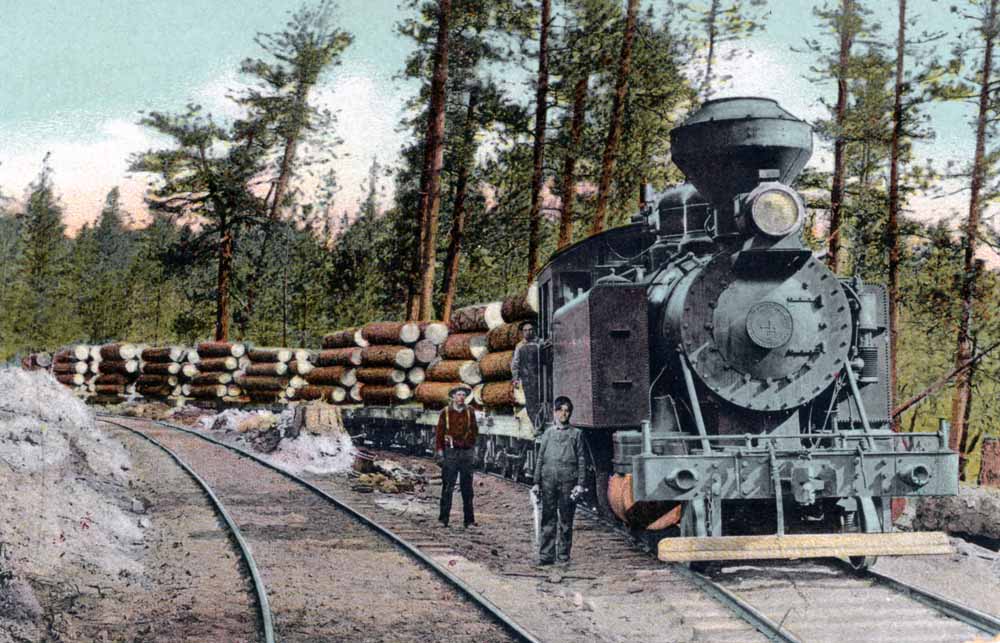 Early in its life the Weed Lumber #4 got featured in this colorized postcard, which more often than not incorrectly identifies the scene as being somewhere in Oregon. 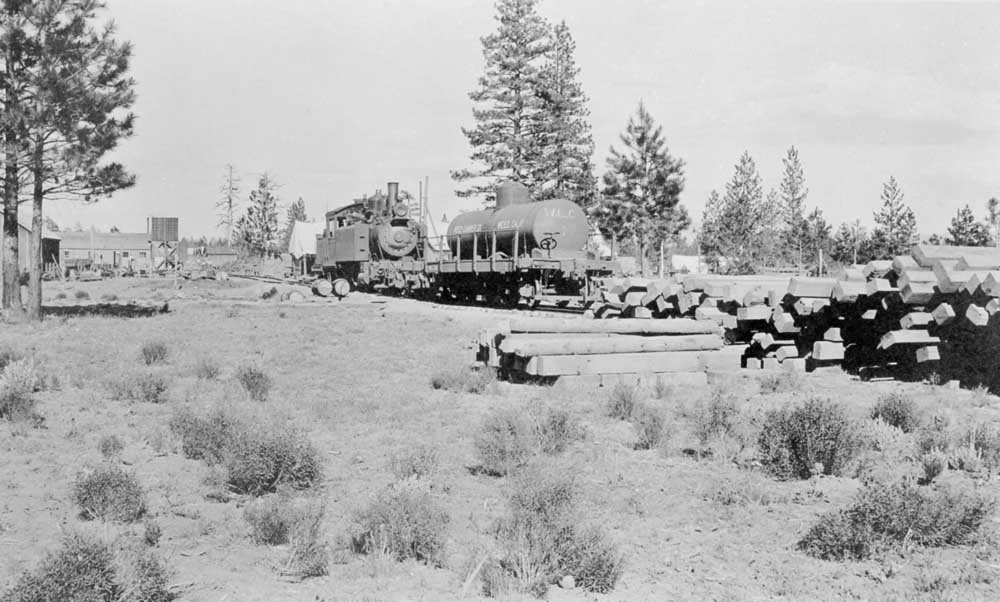 A pre-1920 view of the #4 at the company's Camp 2 near Bray, California. 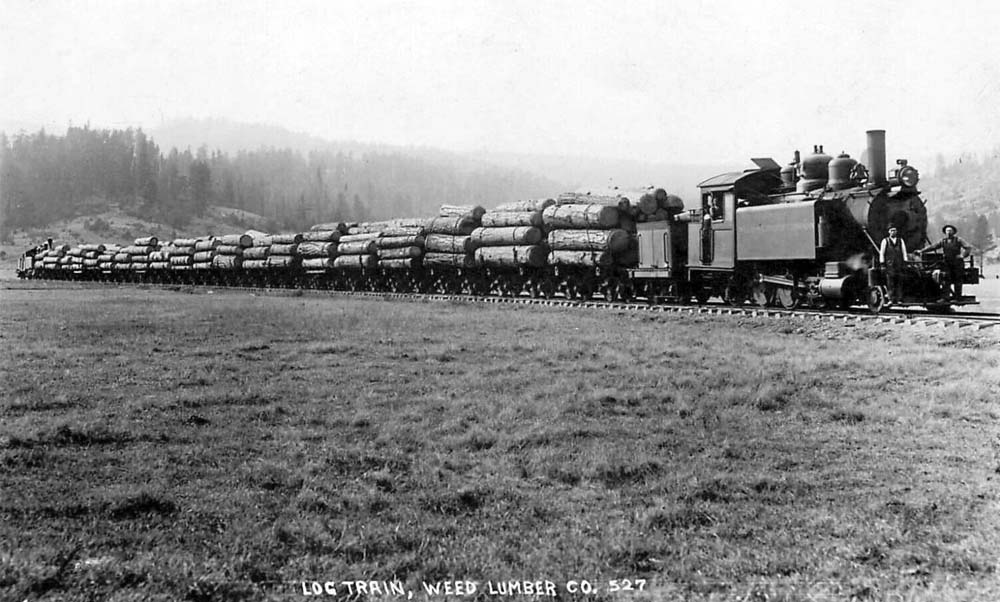 Another early view of a Weed Lumber Company log train, with the #3 on the point and the #4 helping at the rear of the train. 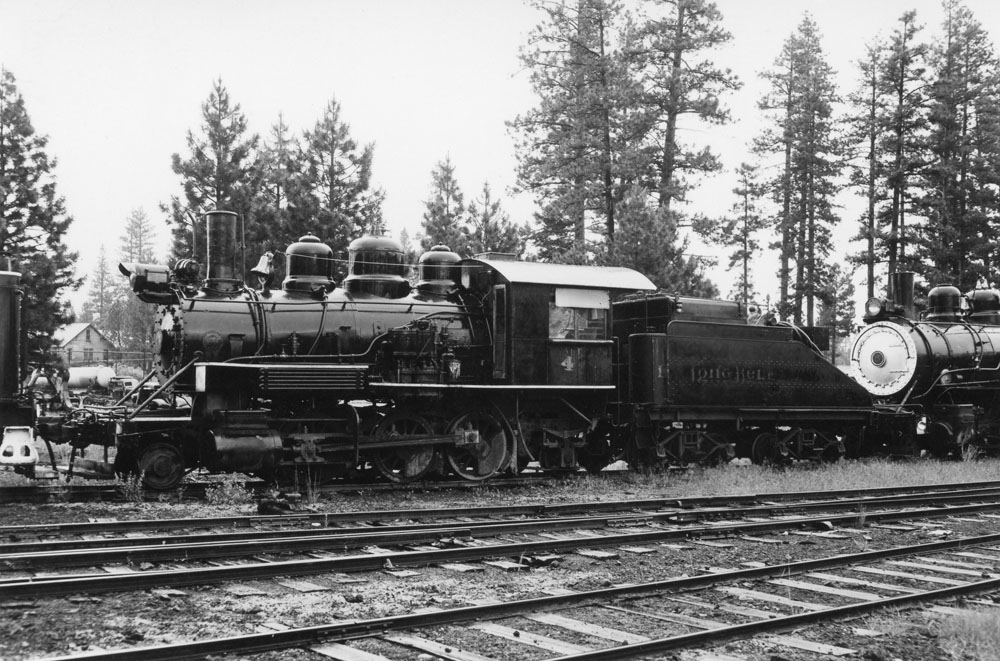 Long-Bell Lumber started buying shares in the Weed Lumber Company in 1904, gained a controlling interest in 1916, and secured outright ownership in 1923, then fully merged the companies together in 1926. The Long-Bell #4 is seen here in Tennant sometime in the later 1940s. 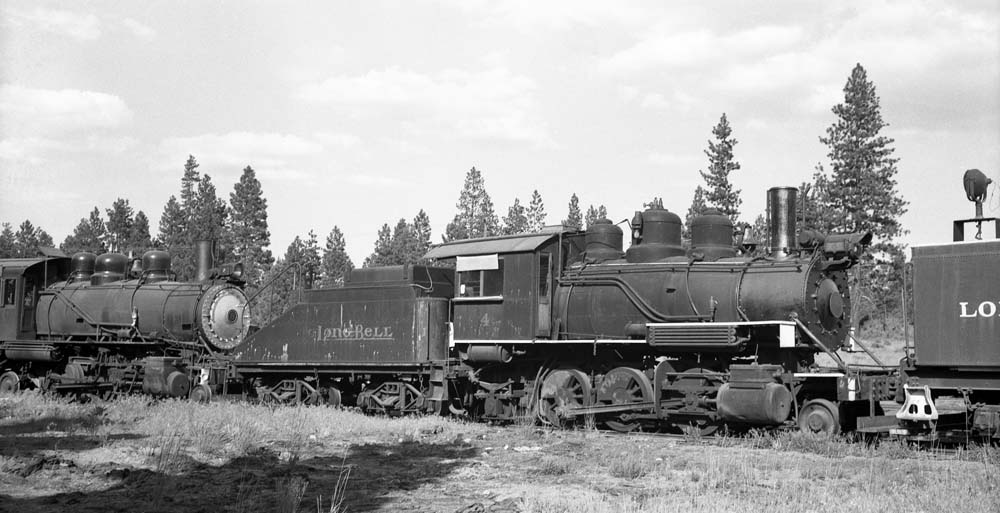 By the middle 1950s the #4 was in the dead line at Tennant awaiting its sale to the scrapper. 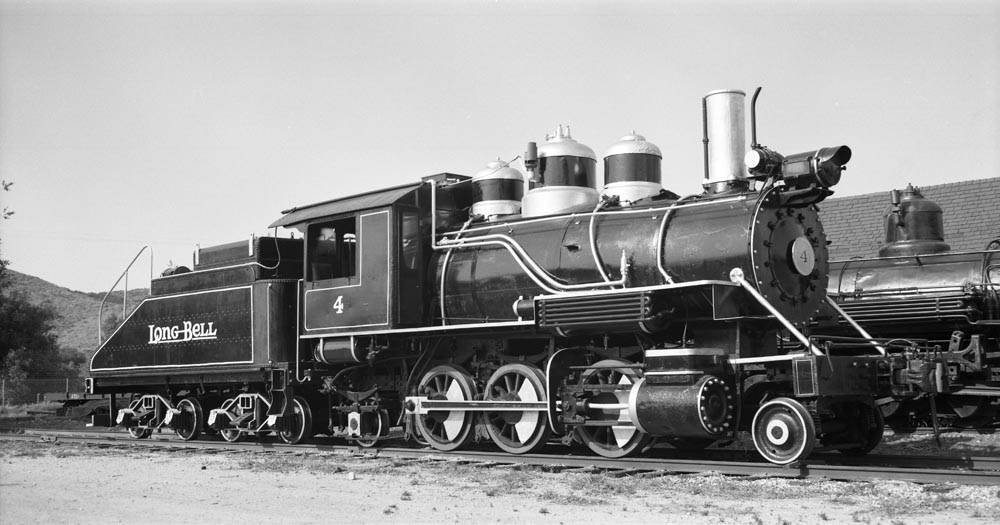 The #4 on its display track at Gene Autry's Melody Ranch on 27 April 1957. 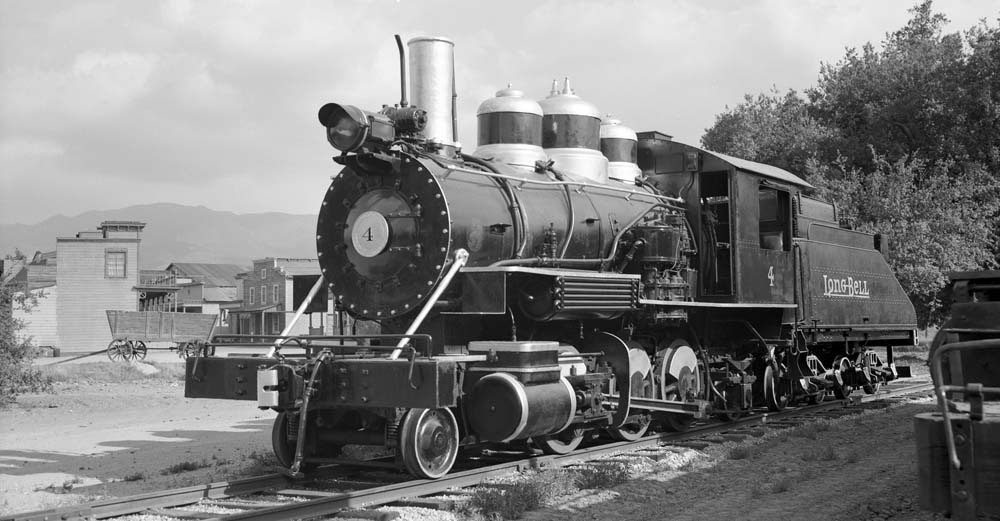 Another view of the #4 at the Melody Ranch, with a movie set Gene built in the background. McBryde Sugar/Lihue Platation #604 There are a lot of parallels between the railroads of the timber and sugar industries in that both existed to move plant materials harvested from the landscape over mostly temporary tracks to the mills. In April 1900 Baldwin turned out a small 30-inch gauge 0-6-0, its c/n 17679, new for the McBryde Sugar Company on the island of Kauai. The locomotive worked for McBryde as their #1, later renumbered to #4 and named the Lihue. McBryde reboilered the locomotive in 1920 with a new boiler, Baldwin XO-195. Lihue Plantation bought the locomotive either in 1934 or 1947 as their #4 and later renumbered tot #604. Gene Autry bought the locomotive along with five flatcars which he transported to Melody Ranch. Fred bought and moved the locomotive and cars along with the Weed/Long-Bell #4, they are currently stored in Merrill and up for sale. 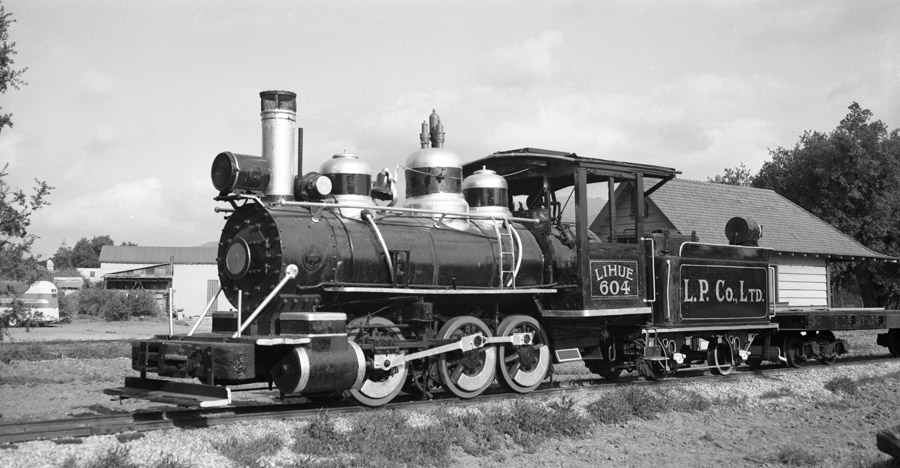 The Lihue Plantation #604 on display at Melody Ranch on 15 April 1957. 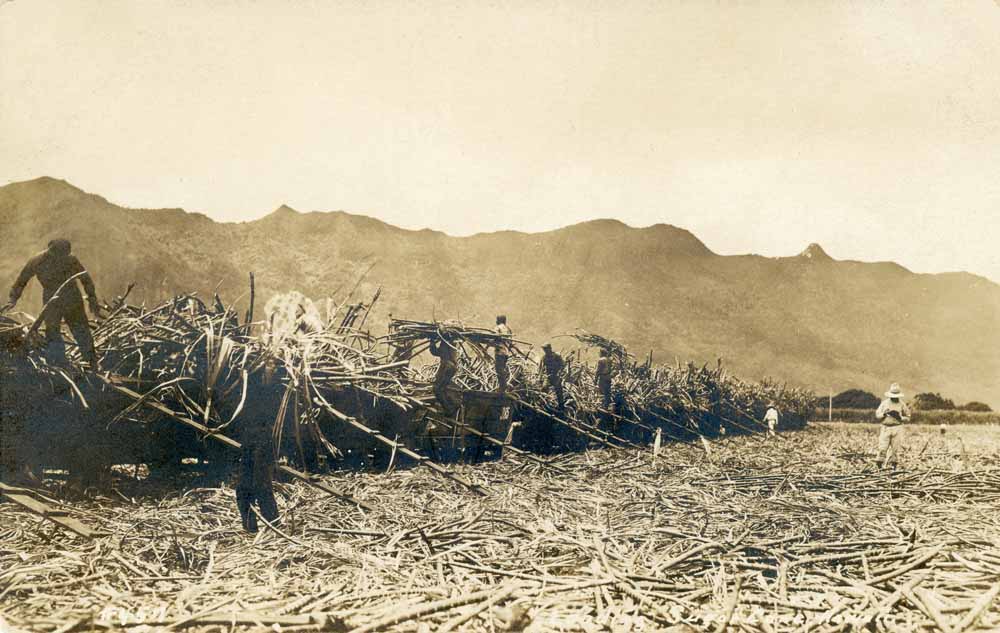 Loading sugar cane on Kauai, the environment in which the #604 spent most of its life. 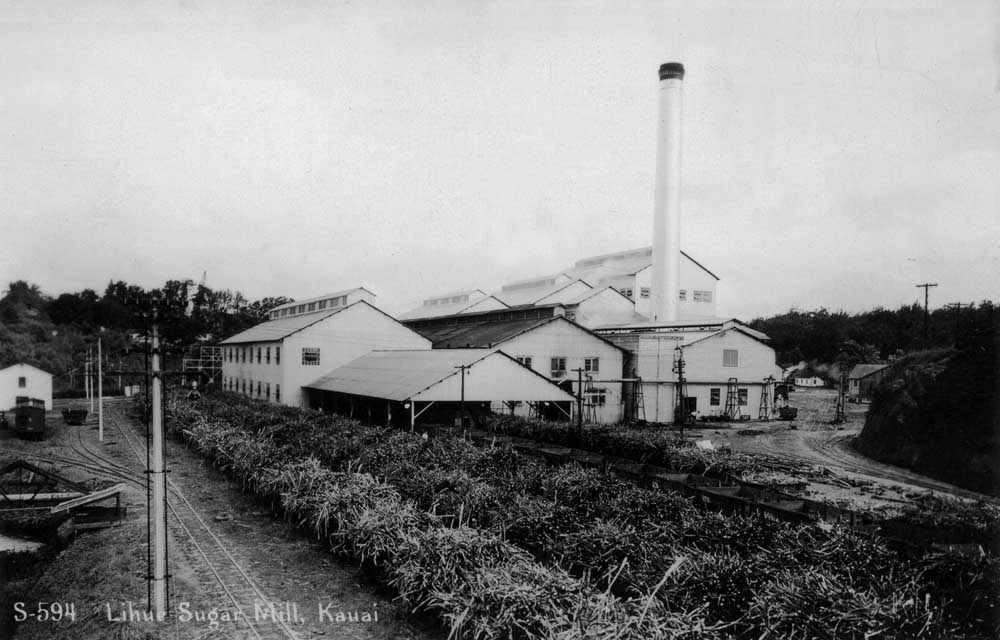 A postcard view of the Lihue Plantation sugar mill. Lihue Plantation was the last Hawaii sugar operation to shift from trains to trucks, with the final trains running in 1959. Burlington Northern #569, #570, and #571 EMD built an order of TR-2 transfer units, which consisted of a "normal" and cabless NW-2 switchers semi permanently coupled together, for the Chicago, Burlington & Quincy in 1949. The road quickly soured on the arrangement, and in late 1954 they sent the units back to EMD to be rebuilt as standard NW-2 switchers. As TR-2s each pair carried the same number with an "A" added to the cab unit and a "B" added to the cabless booster, and the railroad retained those designations after the boosters got rebuilt with cabs. Three of the switchers, c/n 8510 (CBQ #9411B), c/n 8507 (CBQ #9412A), and c/n 8598 (CBQ #9412B) became Burlington Northern #569, #570, and #571 following the merger creating that railroad in 1970. BN retired all three of the locomotives in August 1983, after which Fred purchased them and brought them to McCloud. The trio languished at various storage spots in the yard and at Ash Creek Junction before finally being scrapped behind the McCloud shop in the spring of 2002. 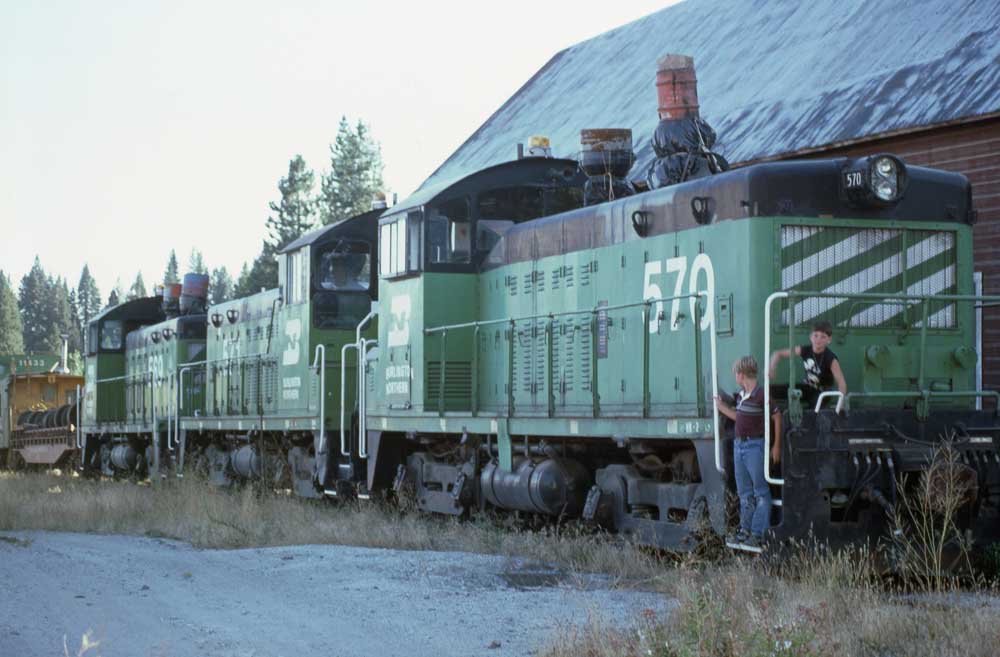 The three switchers in McCloud shortly after arriving on the railroad. Jerry Lamper photo. 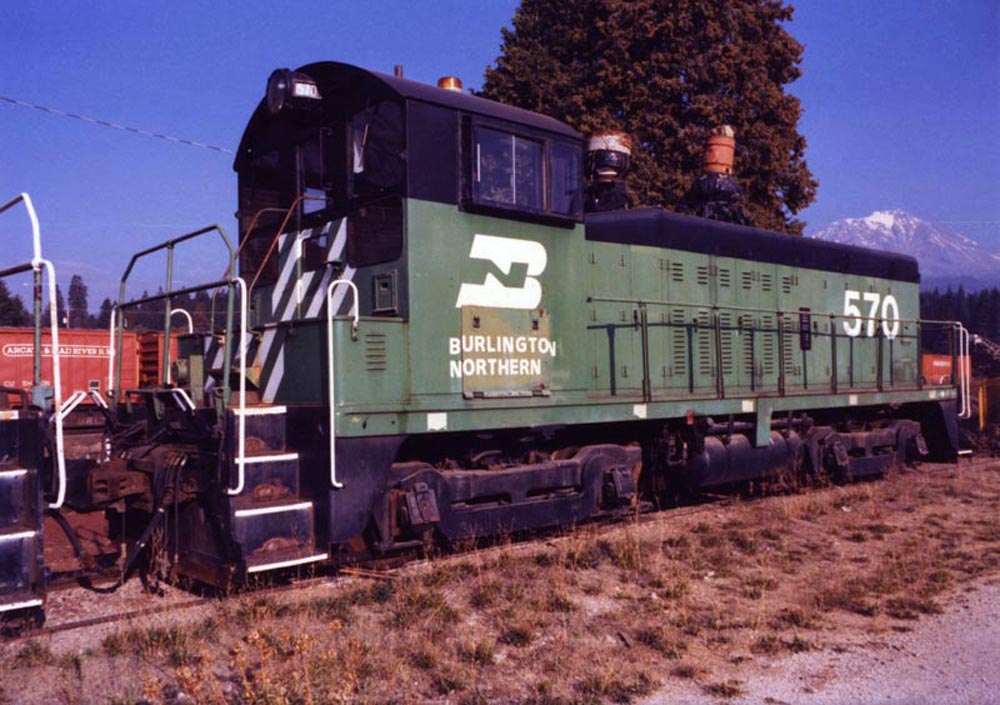 The #570 in McCloud in the middle 1980s. Pat Driscoll photo. 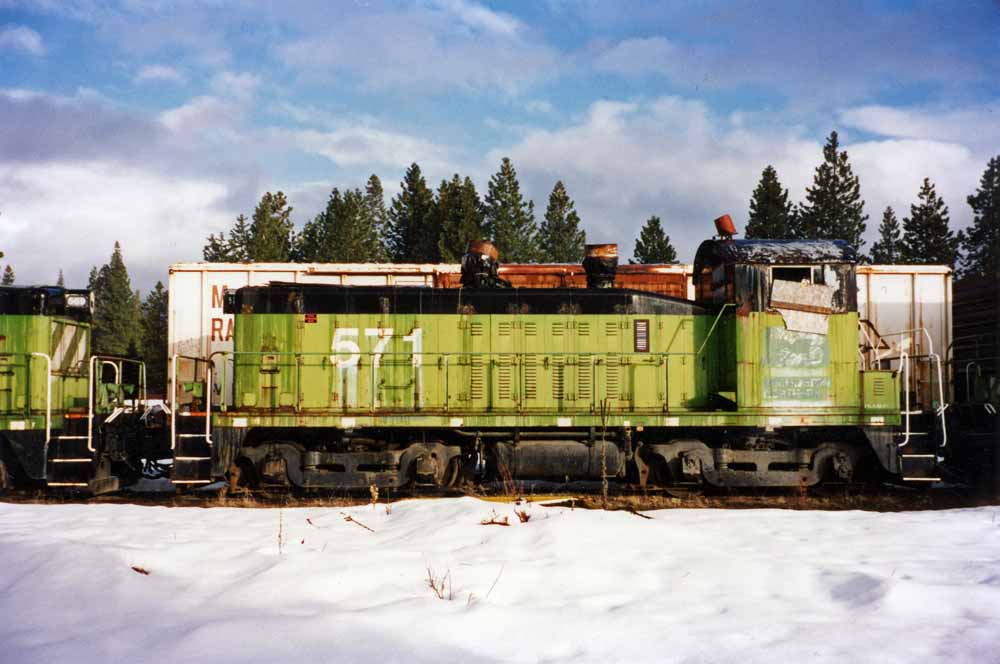 By the later 1980s the railroad moved the switchers to Ash Creek Junction, where they remained for close to the next two decades. Jeff Moore photo. 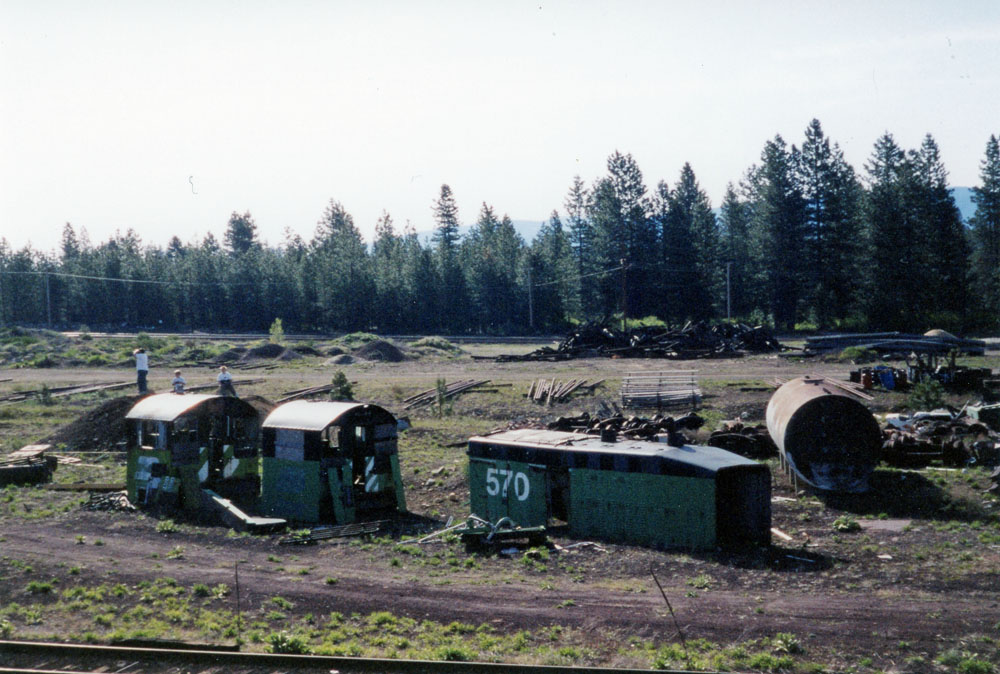 The remains of the switchers in the process of being scrapped in the spring of 2002. Alicia Moore photo. Railcars 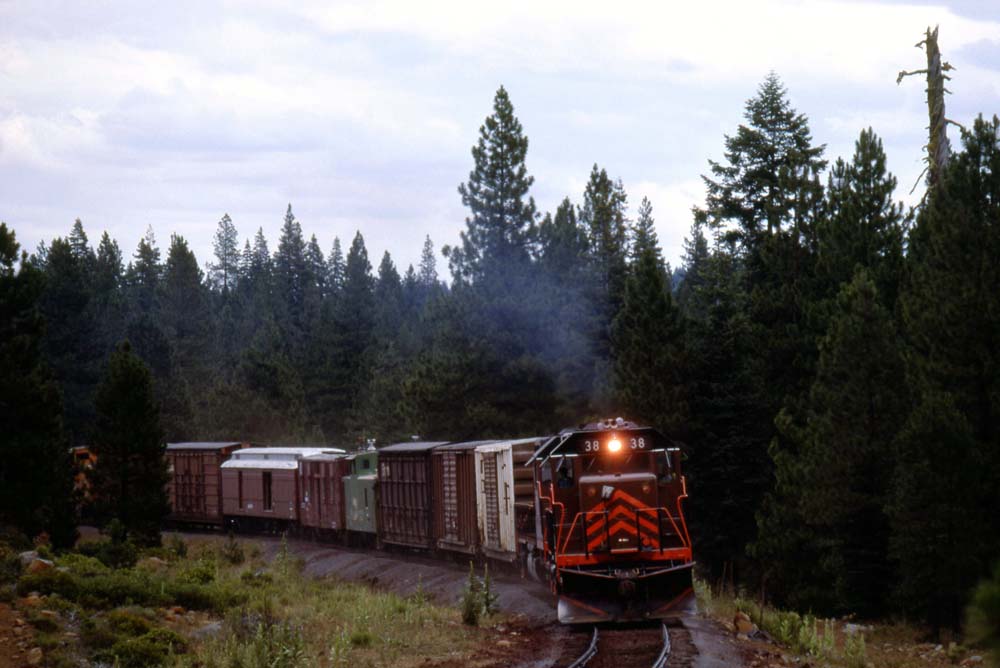 Great Western's railcars arrived on the McCloud mostly through the BN connection at Lookout Junction, where the railroad picked them up for delivery to McCloud. Wayne Monger photo. 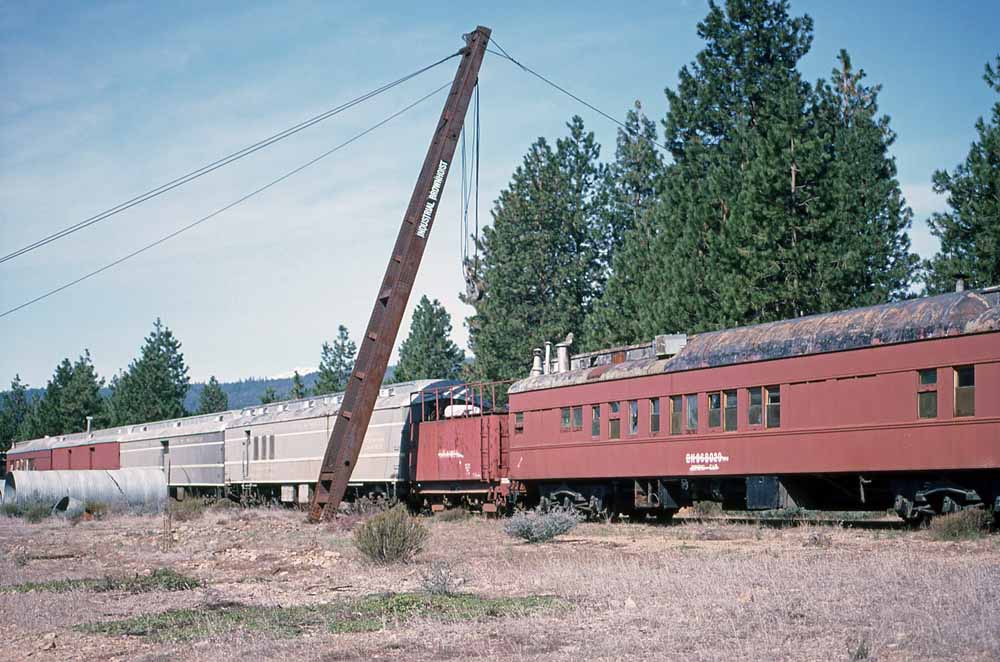 A line of the museum's cars at Ash Creek Junction on 29 March 1988. Jerry Lamper photo. Burlington Northern Caboose #11433 BN 11433 was a 30-foot car originally from the Northern Pacific, it had carried numbers 1098 and 10907 on that road. The car vanished out of McCloud sometime in the 1990s. 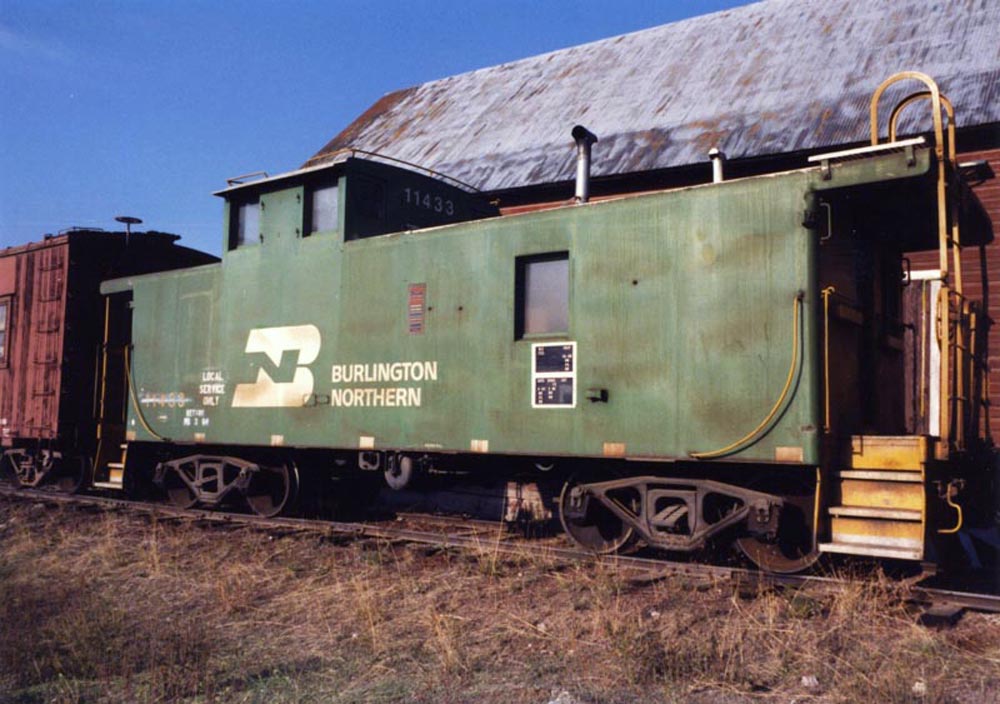 Pat Driscoll photo. Northern Pacific Outfit Car #201413 The wood bodied outfit car arrived in McCloud around 1984. Around the early 2000s the Shasta-Cascade Rail Preservation Society acquired the car and moved it to their grounds near Redding where it remains today. 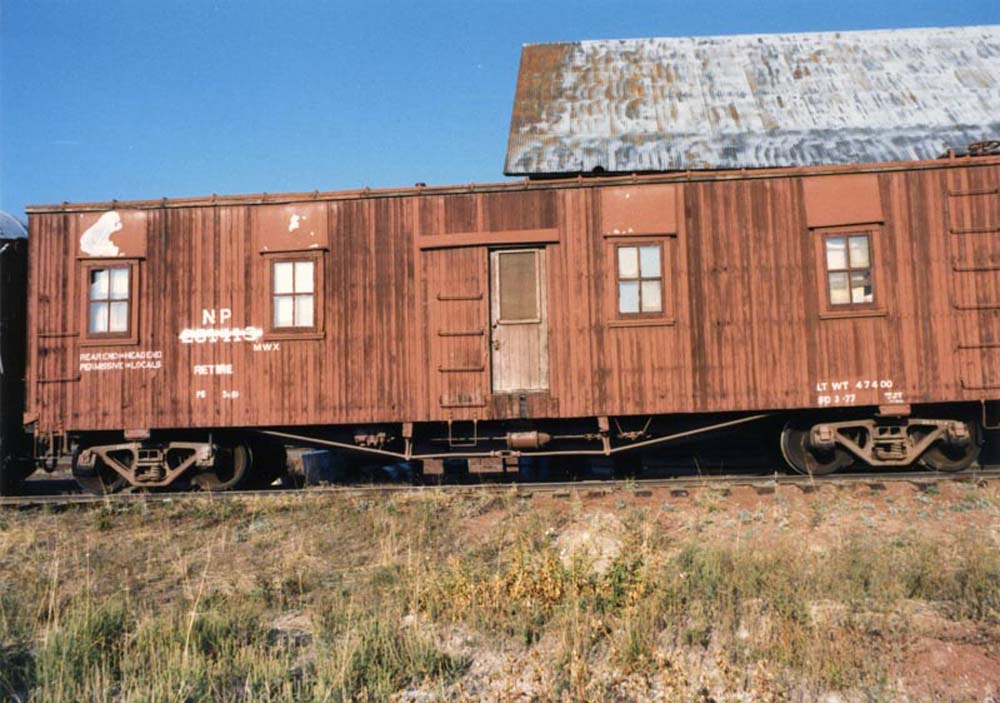 Pat Driscoll photo. 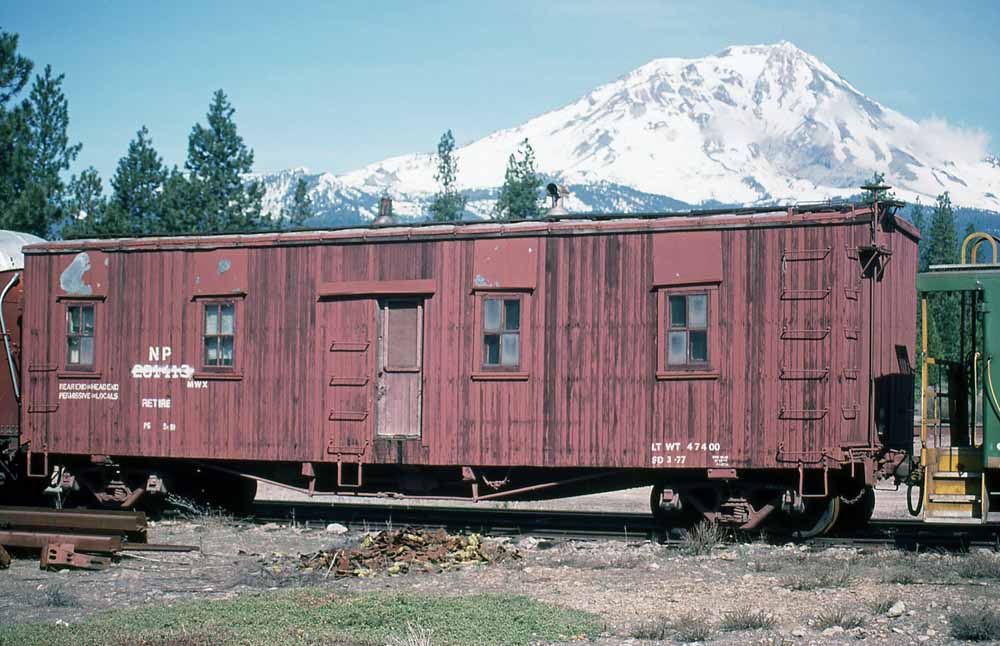 The car at Ash Creek Junction on 29 March 1988. Jerry Lamper photo. Trailer-Train Flat Car Fred moved this former Trailer-Train flatcar into McCloud by early 1985. The museum installed the benches and railings and used it on a few McCloud excursions in 1985 and 1986. The museum shortly thereafter leased the car to the Yreka Western where it became a fixture on that road's Blue Goose passenger excursions. In the early 2000s a private party purchased the car and shipped it to the City of Prineville Railroad in central Oregon for use behind the Mt. Emily Lumber Company Shay locomotive that road hosted. While the Shay has moved on, this car still remains in Prineville. 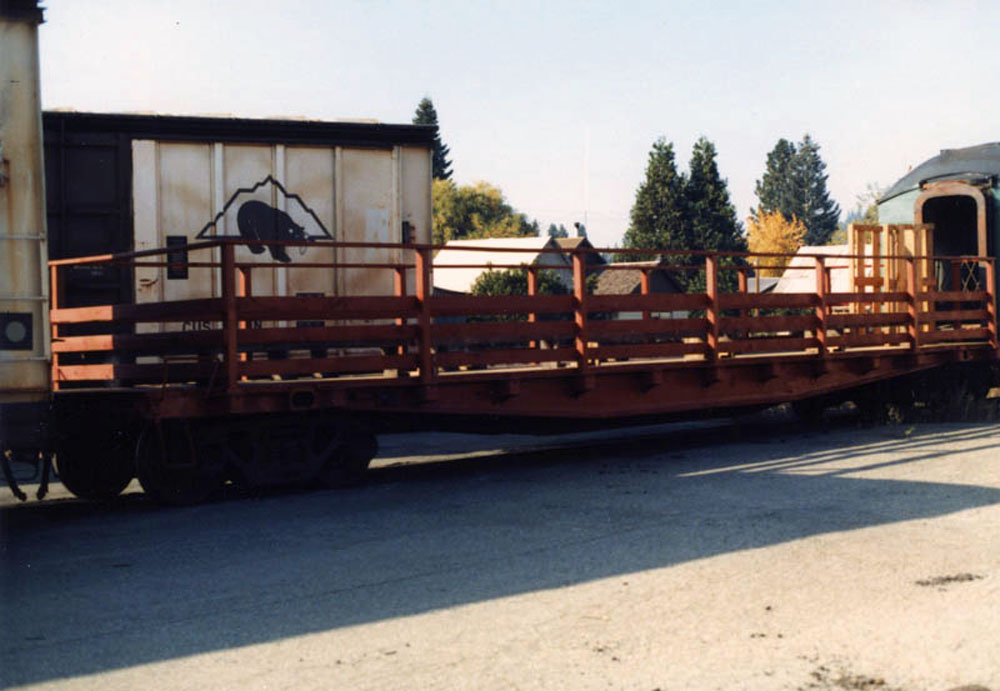 Pat Driscoll photo. Burlington Northern Water Car #1990 This car started life as a tender for a coal fired Great Northern steam locomotive and then later converted to a water car. An undated photo exists of this car in Bellingham, Washington. Fred acquired the car and moved it to McCloud in the middle 1980s, it remains in McCloud today. 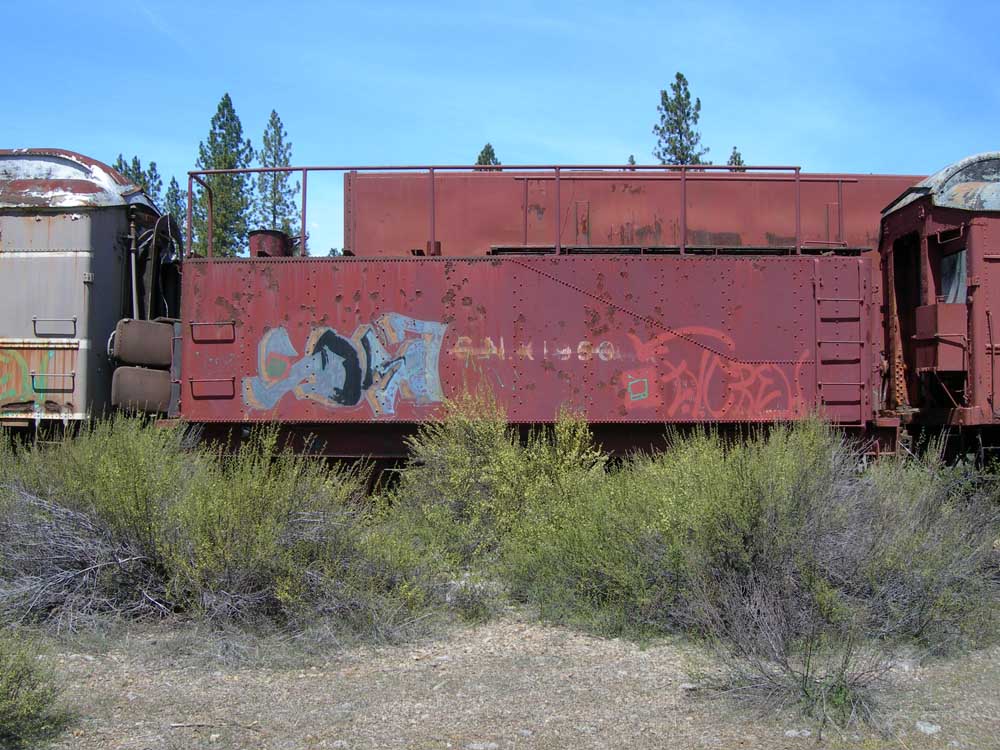 BN water car #1990 at Ash Creek Junction in May 2007. Jeff Moore photo.
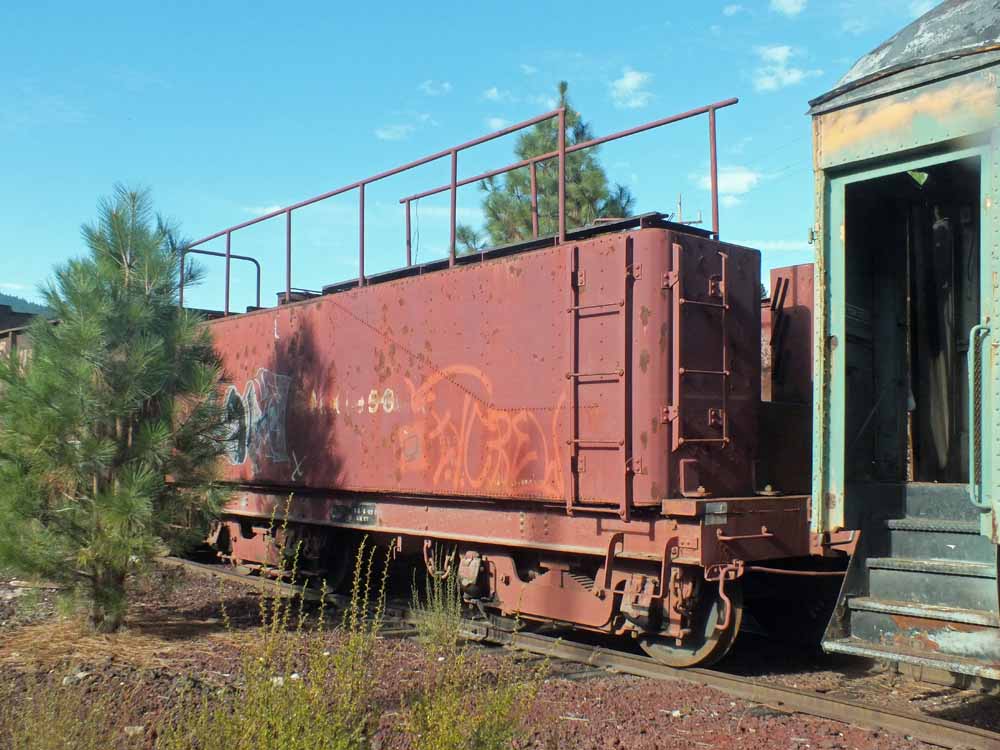 McCloud, California, October 2016. Jeff Moore photo. Burlington Northern #968029 This car started life as the Pullman Company's "Mt. Lyell", built as a 10 section Sleeper-Lounge-Observation car in Pullman Lot #4816, completed on 4 October 1924. Chicago, Burlington & Quincy acquired the car on 31 December 1948 as part of Pullman's divestiture and assigned in #644. CB&Q reclassified the car to maintenance-of-way work on 23 March 1954 and then renumbered the car to #251166 on 10 April 1959. Burlington Northern inherited the car in the 1970 merger, and renumbered it to #968029 in August 1975. BN retired the car in May 1984 and sold it to Fred who brought it to McCloud. It remains at Ash Creek Junction today. 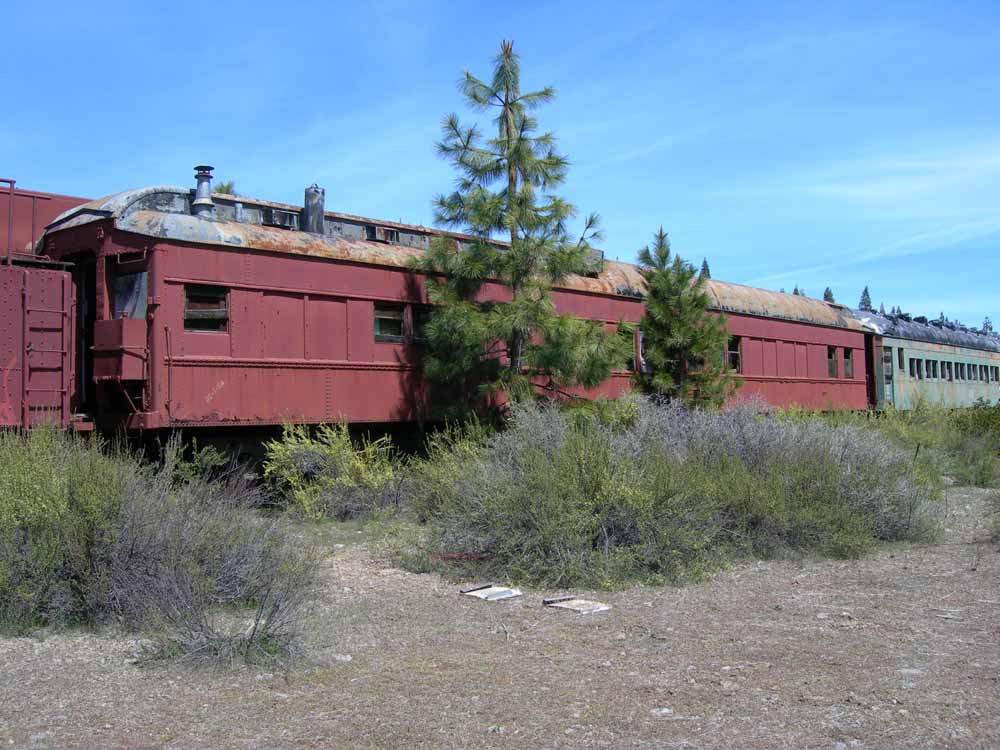 Ash Creek Junction, May 2007. Jeff Moore photo. Burlington Northern #968054 This car started out as another Pullman 14-section sleeper, the General A.H. Terry, Lot #6373, Plan #3958A, built June 1930 for assignment to the Great Northern's Empire Builder. Rebuilt to a 6 section-6 double bedroom configuarion (Plan #408B) in April 1939. Great Northern acquired the car in Pullman's divestiture on 31 December 1948 and assigned it #1012. GN reclassified the car to maintenance-of-way service after June 1962 as #O-3412, then later renumbered the car to #968054. Retired 1985 and sold to Fred who brought it to McCloud. It remains at Ash Creek Junction today. 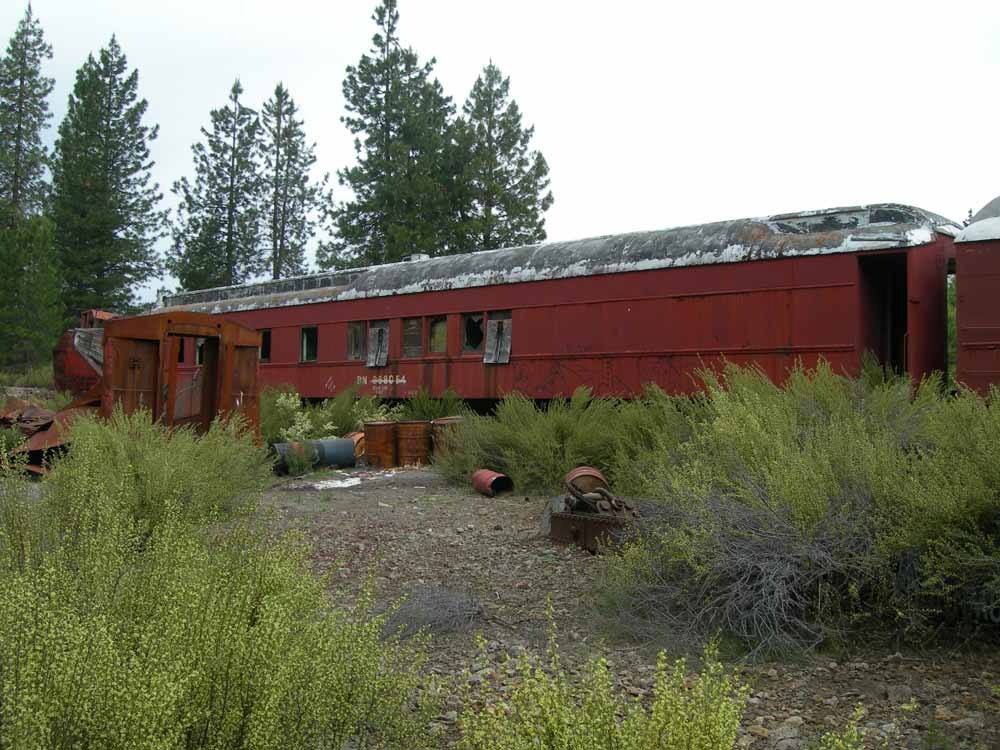 Ash Creek Junction, June 2008. Jeff Moore photo. 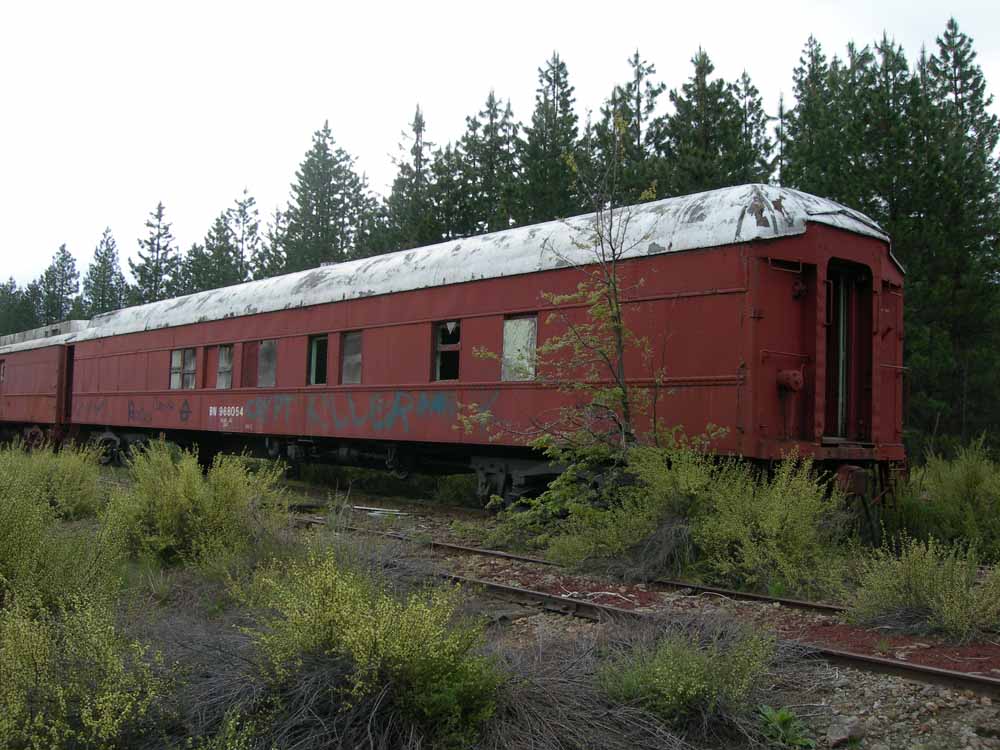 Ash Creek Junction, June 2008. Jeff Moore photo. Burlington Northern #976176 This car has been identified as a former Chicago, Burlington & Quincy baggage car. More history may be added later if it can be determined. Fred acquired the car from Burlington Northern after its May 1984 retirement, and it remains in Ash Creek Junction today. 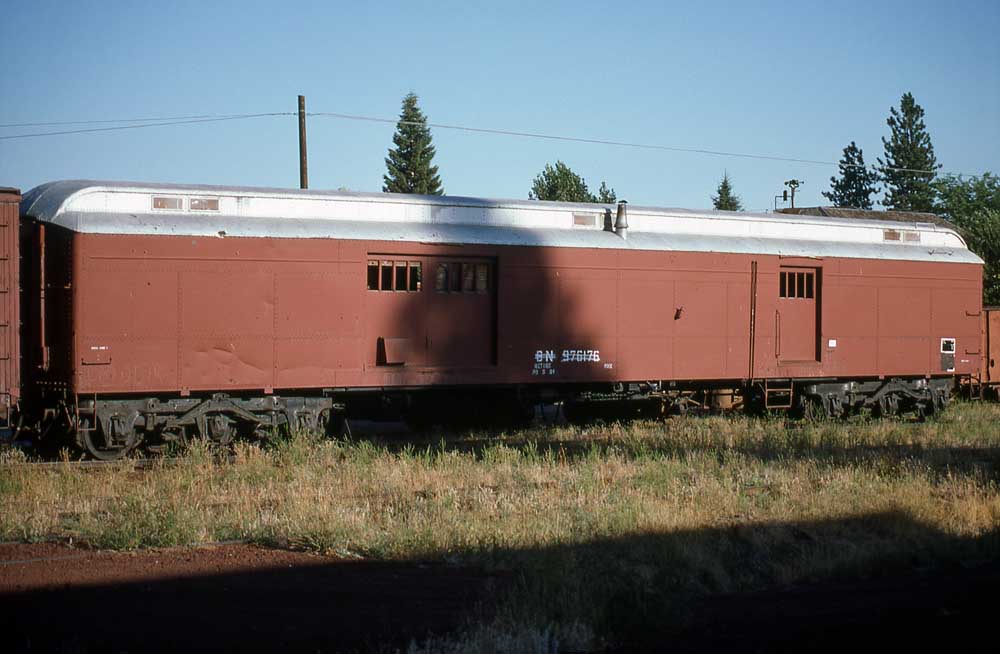 Baggage car #976176 in McCloud in the middle 1980s. Jerry Lamper photo. 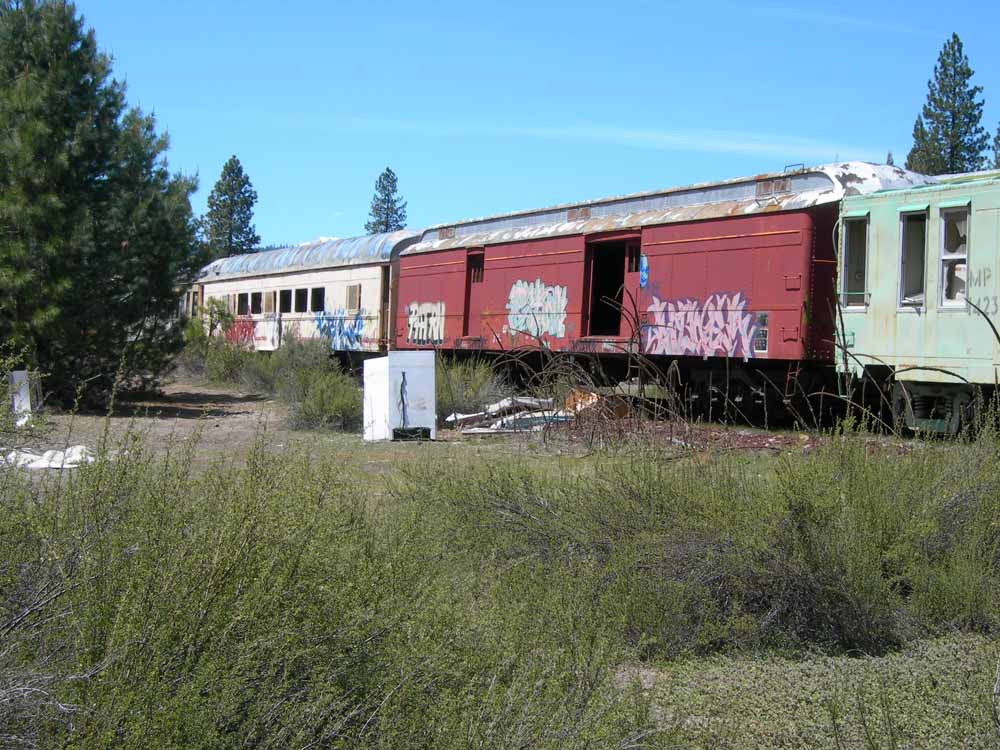 The car at Ash Creek Junction in May 2007. Jeff Moore photo. 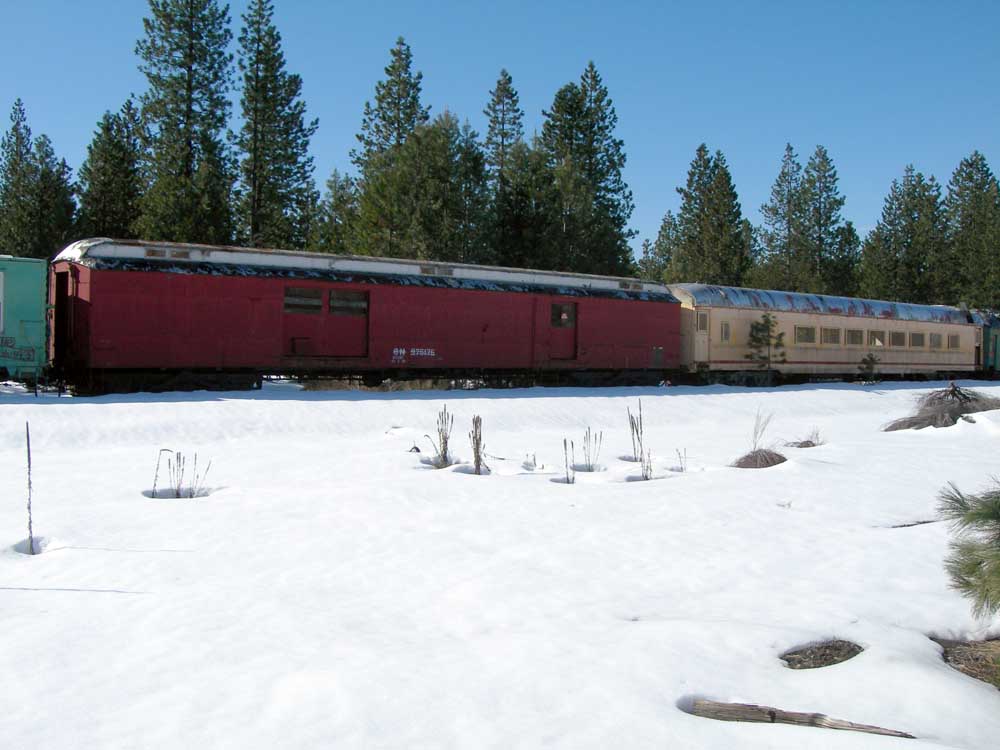 BN #976176 at Ash Creek Junction in March 2010. Jeff Moore photo. Great Northern Baggage Car #O-3396 As with the #976176, the history of this car has yet to be fully determined. Fred acquired it from Burlington Northern in the middle 1980s. The car remained at Ash Creek Junction until around 2012 or 2013 when the railroad brought the car into McCloud and set it on some freight car trucks, most likely so that some wheels could be salvaged from the three axle trucks originally underneath the car for use under the Shasta Sunset Dinner Train cars as they were sent off to Idaho. 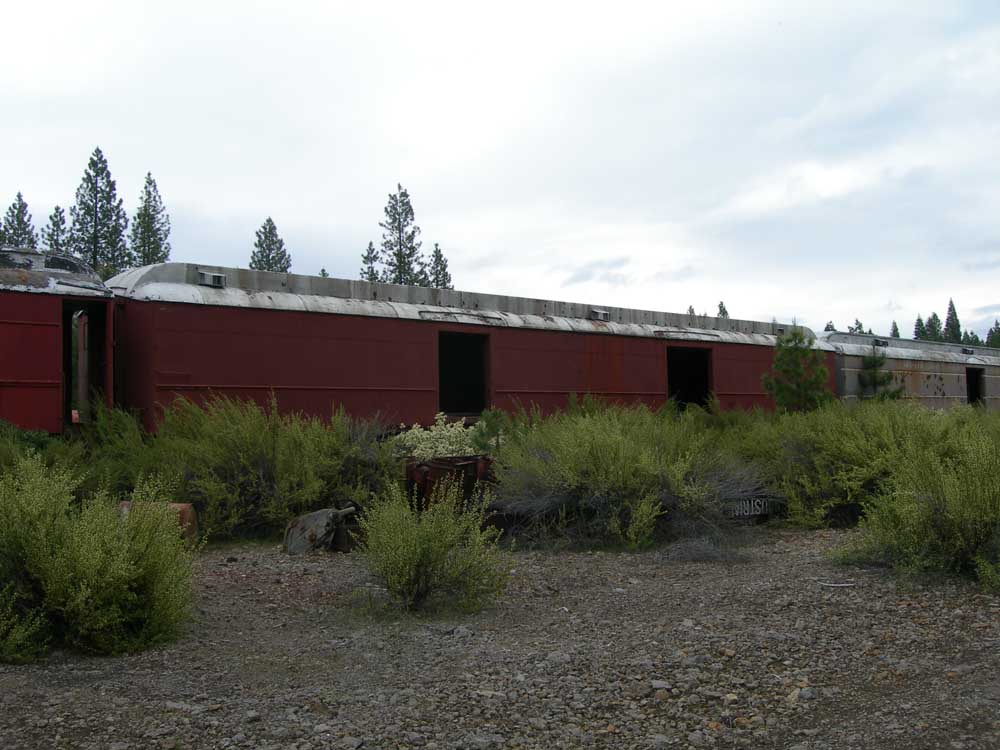 Ash Creek Junction, June 2008. Jeff Moore photo. 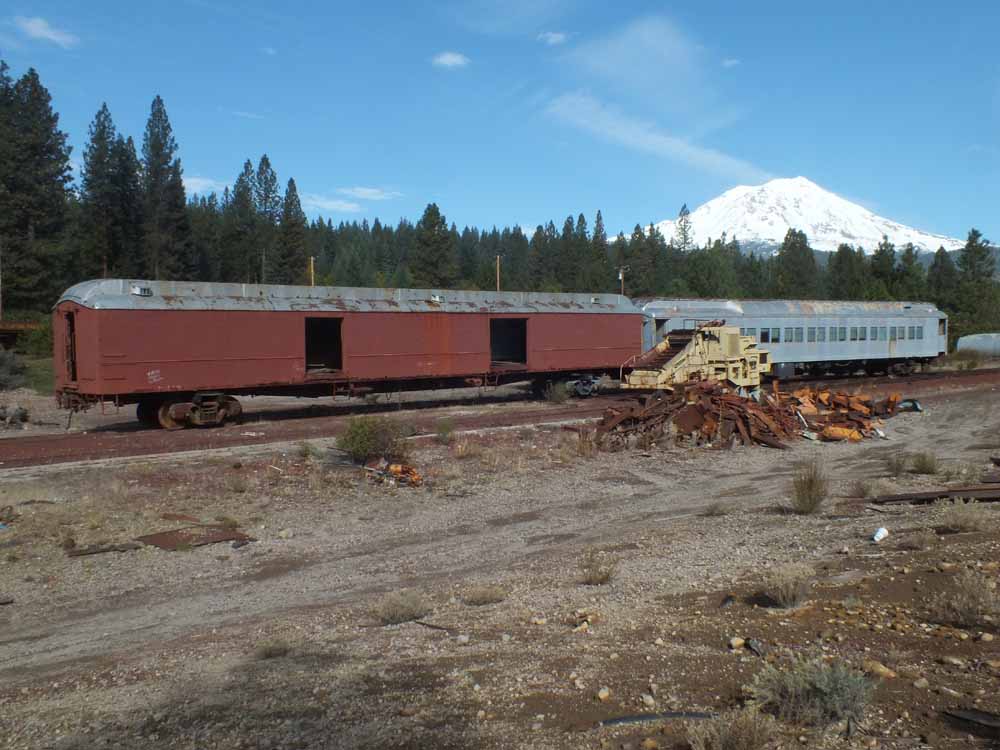 McCloud, California, October 2016. Jeff Moore photo. 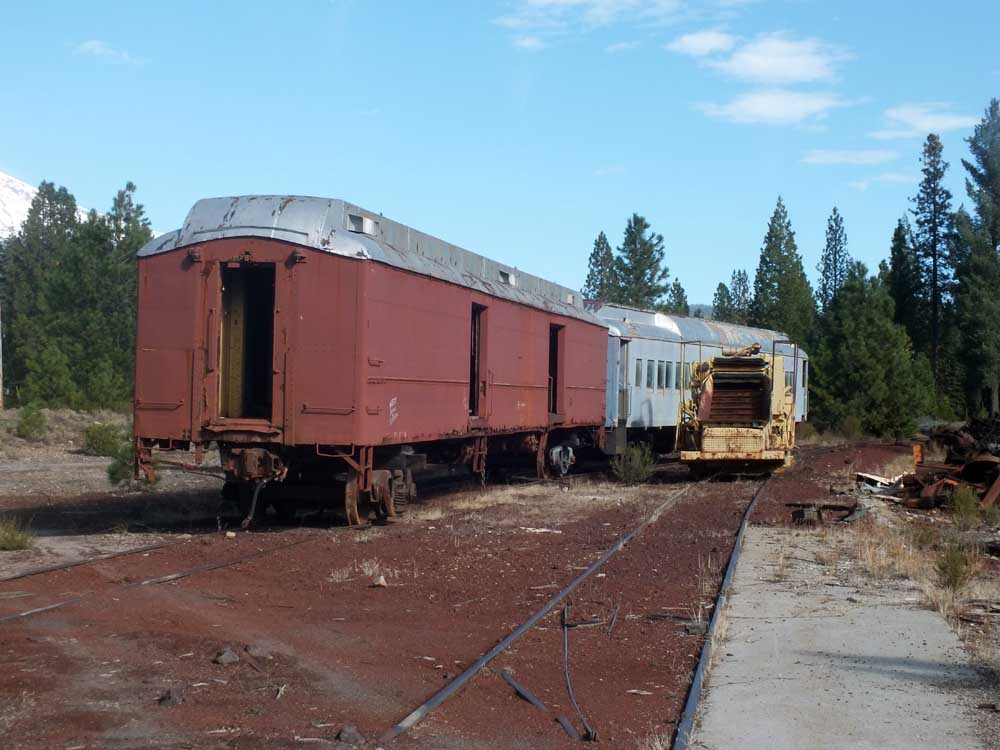 McCloud, California, October 2016. Jeff Moore photo. 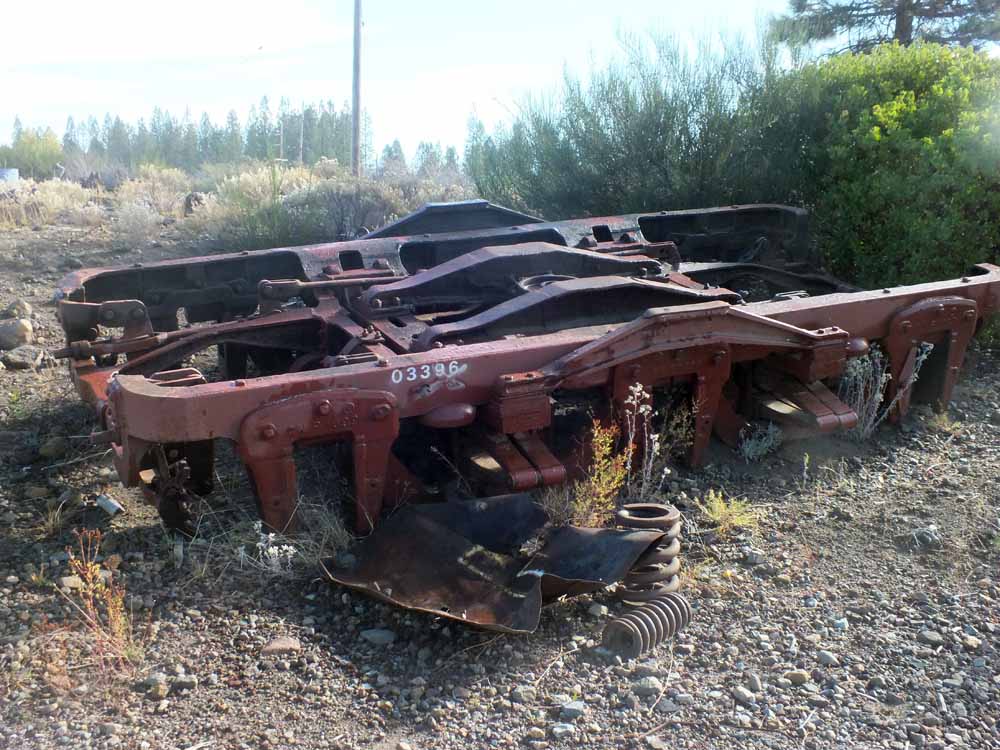 One of the passenger car trucks removed from the car behind the McCloud shop. October 2016. Jeff Moore photo. Spokane, Portland & Seattle #46 This car also started out as a Pullman 12 section-1 drawing room sleeper, Lot #4503, Plan #2410F, July 1917, named the Pampagna. It was used in the company's general service pool and converted to tourist car #1391 in January 1942. SP&S acquired the in December 1947 and rebuilt it to baggage car #46 in December 1948. Burlington Northern inherited the car in the 1970 merger and donated it to Bend, Oregon, in 1973, where it remained on display until Fred acquired the car and moved it to McCloud, where it remains today. 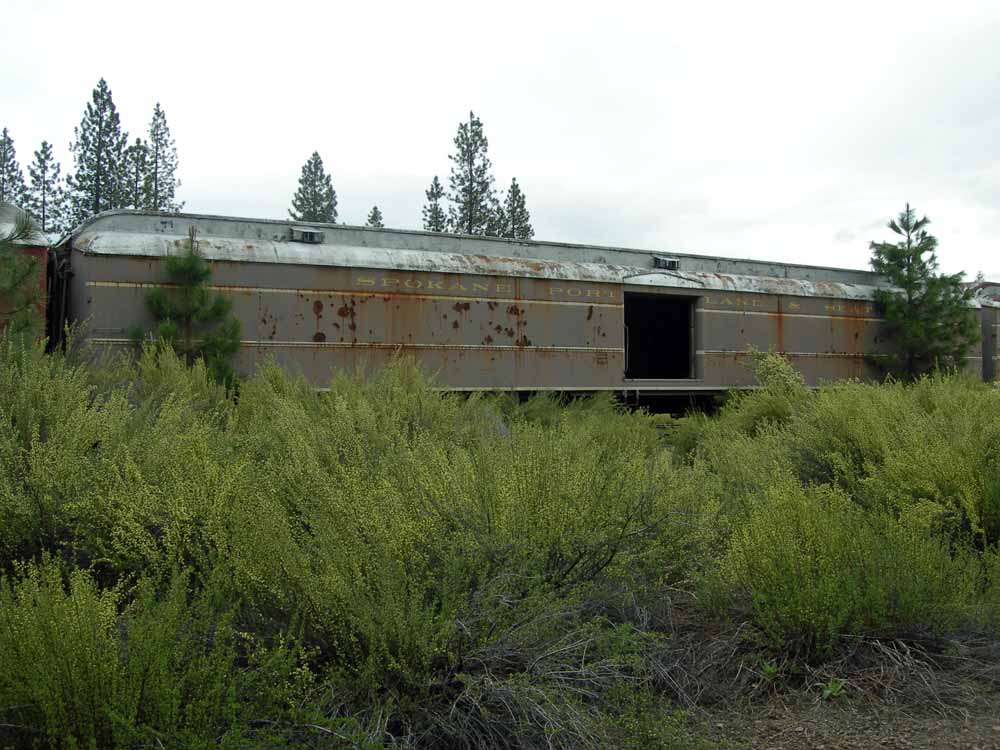 SP&S #46 at Ash Creek Junction in June 2008. Jeff Moore photo. Spokane, Portland & Seattle #57 Like the #46 this car also started out as a Pullman 12 section-1 drawing room sleeper, Lot #4319, Plan #2410B, May 1915, named the Sakana. Also a general service pool car, then coverted March 1942 to tourist car #1431. Sold December 1947 to SP&S and rebuilt to postal storage car #57 (2nd) in November 1950. Burlington Northern inherited the car in the 1970 merger and donated it to Bend, Oregon, in 1973, where it remained on display until acquired by Fred and moved to McCloud in the middle 1980s. The Yaquina Pacific Railroad Historical Society in Toledo, Oregon, acquired the postal service equipment and furnishings from inside the car for display in their former Southern Pacific Rail Post Office car. The car remains at Ash Creek Junction today. 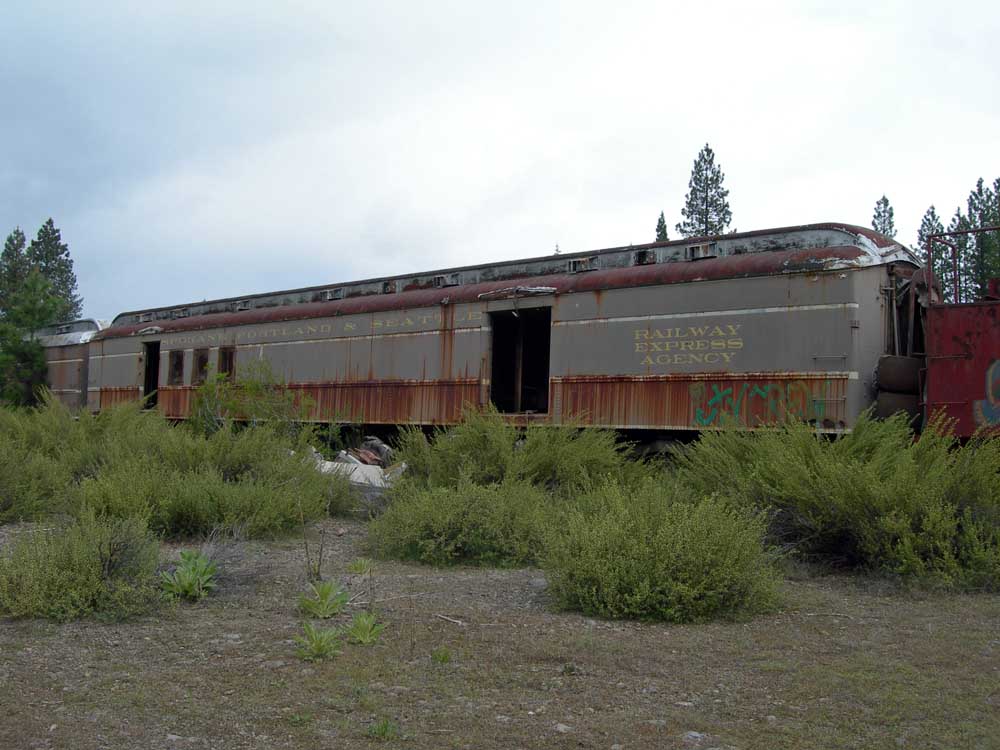 SP&S #57 at Ash Creek Junction in June 2008. Jeff Moore photo. Union Pacific #578 Pullman built this car in February 1931 as Union Pacific #1268, it is an 82-foot long, 44-passenger streamlined heavyweight chair car. UP renumbered the car to #578 in August 1948, retired it in August 1968, and donated it to the City of Bend, Oregon, in June 1971. Fred acquired this car along with the SP&S #46 and #57 and moved them to McCloud, where it remains today. 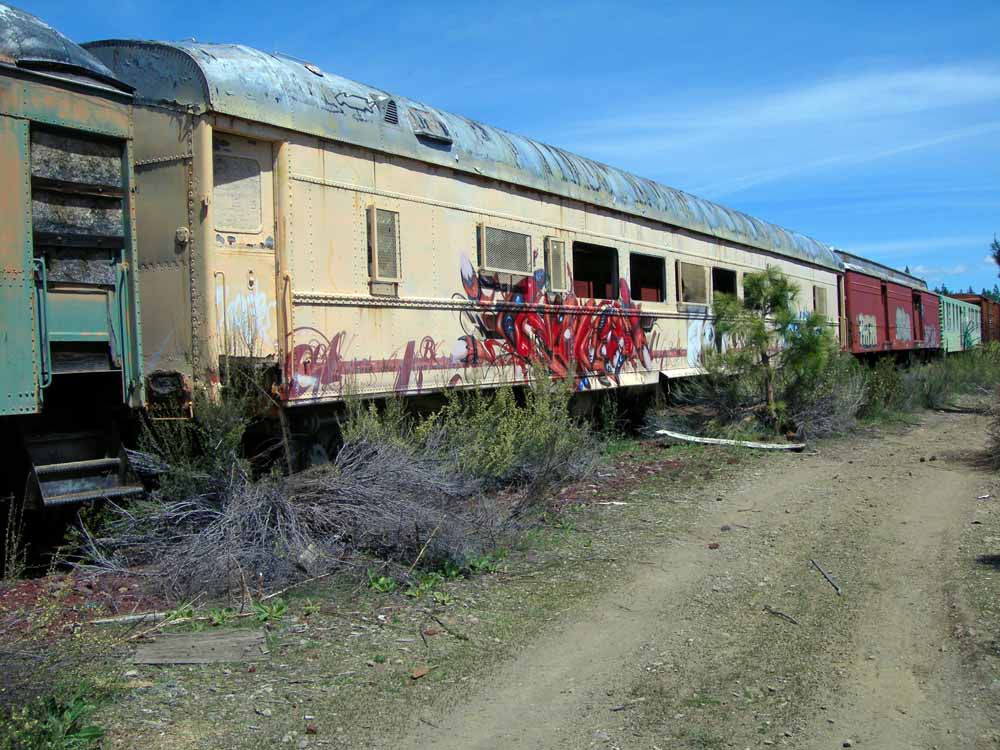 Ash Creek Junction, May 2007. Jeff Moore photo. 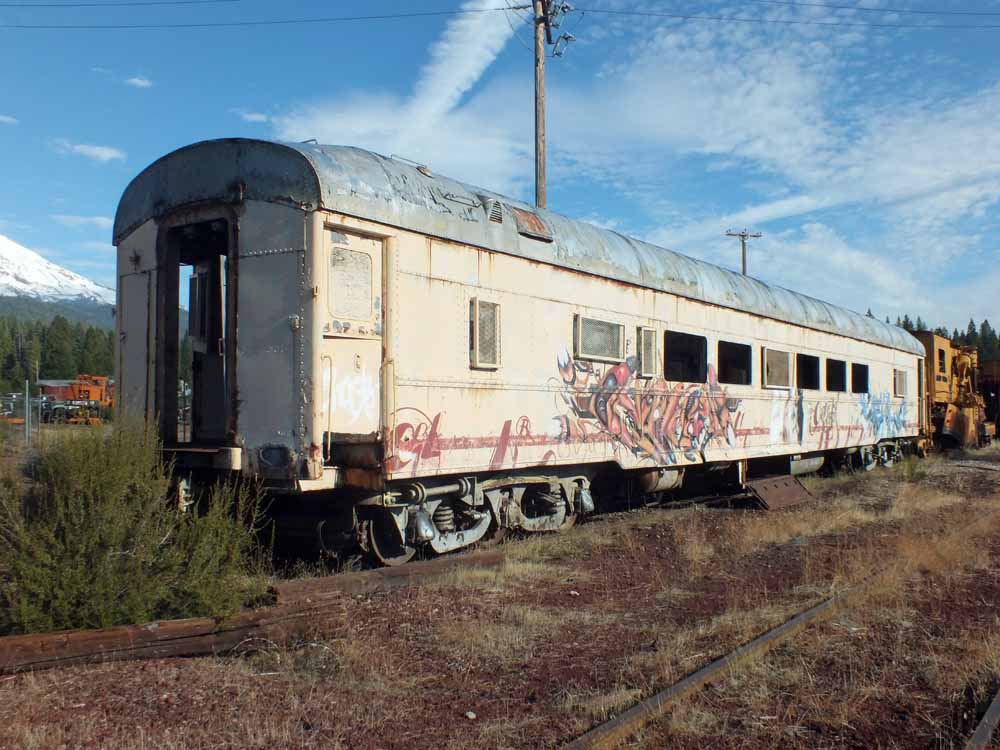 McCloud, California, October 2016. Jeff Moore photo. Special thanks to Ted Brumberg, "Rainier Rails", for digging up history on many of these cars. Other resources consulted include UtahRails.net and numerous other websites. |
|
|